
Zornia latifolia
Zornia latifolia Sm.
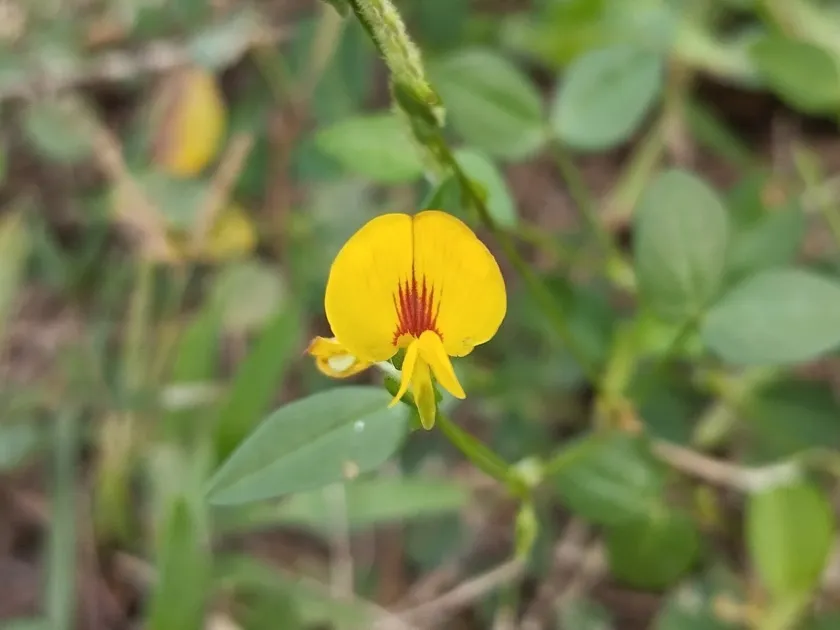
Description
Sowing dates
Zornia latifolia is a perennial leguminous herb widely recognized for its role in pasture improvement and soil nitrogen enrichment within tropical agricultural systems.
The optimal sowing time begins with the onset of the rainy season, as the seeds require consistent moisture and warm temperatures to achieve high germination rates.
Due to the hard-seeded nature of the species, mechanical scarification or specialized pre-treatment is often recommended to break dormancy and ensure uniform establishment in the field.
Seeds should be sown at a shallow depth of 1–2 cm. This depth provides the perfect balance of moisture protection and access to light required for young seedling growth.
The plant has a strong capability for self-regeneration and seed dispersal, which makes it an excellent candidate for oversowing into degraded natural grasslands to boost forage quality.
Growing requirements
Zornia latifolia is highly valued for its adaptation to acidic soils with low phosphorus levels and high aluminum saturation, which are common in many tropical areas.
It prefers well-drained soil types and, while hardy, it does not thrive in waterlogged conditions or areas prone to long-term soil saturation.
The crop requires full exposure to sunlight and does not perform well under dense shade, making it unsuitable for intercropping with large, leafy tree species.
Its deep taproot system allows the plant to tolerate prolonged dry spells, maintaining green biomass when many other forage grasses would wither.
As a legume, it naturally forms symbiotic relationships with Bradyrhizobium bacteria, facilitating biological nitrogen fixation which reduces the need for nitrogenous fertilization.
Yield
The biomass yield of Zornia latifolia can vary from 5 to 10 tonnes of dry matter per hectare annually, depending on the fertility of the site and the management practices implemented.
It provides high-quality forage with crude protein content often reaching 15–18%, significantly improving the diet of grazing livestock in tropical regions.
The palatability of the plant is high, and cattle readily graze it, making it an efficient tool for maintaining livestock weight gain throughout the year.
Seed production is generally modest and dependent on the presence of local pollinating insects, which are essential for successful pod development.
Frequent cutting or controlled rotational grazing stimulates the plant to produce more leaves, which in turn leads to a higher total biomass production over the growing season.
Main diseases and pests
Anthracnose, caused by fungi in the Colletotrichum genus, represents the most significant disease threat, leading to leaf lesions and reduced photosynthetic capacity.
Several species of leaf-eating insects and beetles can cause substantial defoliation, which hampers the plant's ability to store energy and recover after grazing.
Root rot diseases occur primarily in poorly drained soils where stagnant water promotes the growth of pathogenic organisms that kill the root system.
Nematode infestations can occur in sandy soils, weakening the plant's vigor and making it more susceptible to environmental stresses and secondary infections.
Effective management includes maintaining diverse grazing schedules and using improved, resistant cultivars to minimize the impact of regional pests and disease outbreaks.
Harvesting
When harvesting for hay, the best timing is at the start of the flowering phase, which ensures an ideal balance of protein, vitamins, and total fiber digestibility.
Rapid drying is essential during the harvesting process to prevent excessive leaf shedding, as the leaves contain the highest concentration of essential nutrients.
In rotational grazing systems, it is vital to avoid overgrazing, allowing the plant enough time to recover its carbohydrate reserves before the next grazing cycle.
For seed production, harvesting should be performed as soon as the pods turn brown but before they reach the point of natural shattering, which can lead to significant yield losses.
The residual stubble left after harvest provides important ground cover, protecting the topsoil from erosion and maintaining soil organic matter for future cycles.