
Zilla spinosa
Zilla spinosa
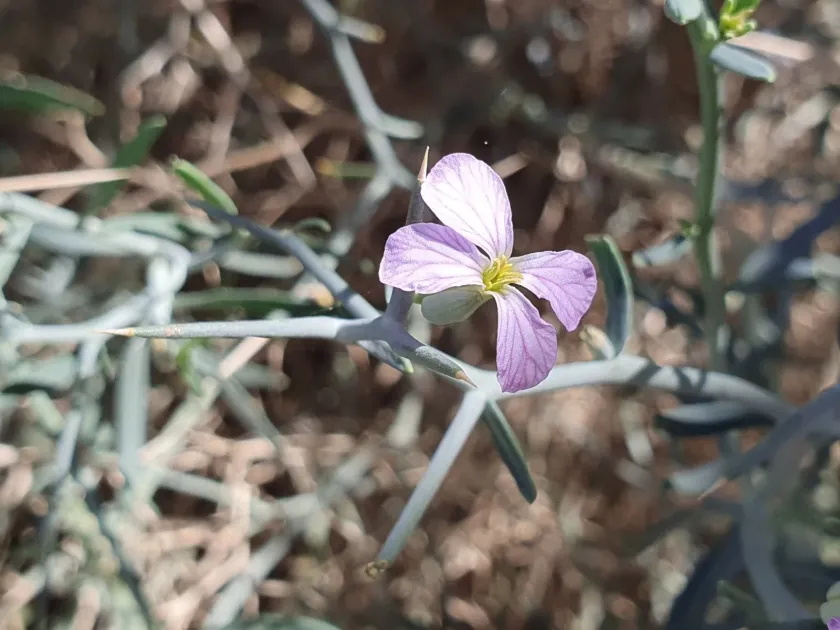
Description
Sowing dates
Sowing Zilla spinosa typically occurs during the onset of seasonal rainfall, which provides the necessary moisture for germination in its native desert environments.
Seeds are usually sown at shallow depths in well-drained, porous soil to ensure that seedlings emerge efficiently without struggling against soil crusting.
Controlled propagation often requires seed scarification to break dormancy, ensuring a more uniform germination rate across the planting field.
Ideal soil temperature for sowing ranges between 15 and 20 degrees Celsius, mimicking the natural transition of seasons in arid regions.
Success in sowing is largely dependent on timing the operation to avoid periods of extreme heat that could desiccate fragile young seedlings.
Growing requirements
Zilla spinosa is a member of the Brassicaceae family, specifically adapted to survive in harsh, arid, and semi-arid climates of the Middle East and North Africa.
The plant thrives in sandy or rocky soils with alkaline pH levels, displaying extreme tolerance for low-fertility substrates that lack organic matter.
A fundamental requirement for this crop is excellent soil drainage, as the species is highly susceptible to root diseases caused by waterlogged conditions.
It acts as a true xerophyte, capable of utilizing deep soil moisture through a robust taproot system that reaches depths inaccessible to other vegetation.
Full sun exposure is essential for the plant to maintain its structural integrity and produce optimal biomass for livestock consumption.
Yield
The primary agricultural utility of Zilla spinosa is its role as a resilient fodder source for camels, sheep, and goats in regions with scarce vegetation.
Its biomass contains valuable proteins and minerals, providing a crucial nutritional buffer for livestock during the driest seasons of the year.
Sustainable grazing practices allow these plants to recover effectively, maintaining a stable supply of green mass even under low precipitation levels.
Seed yield varies depending on the frequency of rainfall and the presence of pollinators, which are vital for the plant's reproductive success.
Farmers in arid regions often prioritize Zilla spinosa due to its ability to yield feed where traditional forage crops would fail to grow.
Main diseases and pests
Zilla spinosa possesses natural chemical defenses, such as secondary metabolites, which offer significant resistance against various common crop pests.
The main biological threats include specialized insects that target the inflorescences, potentially reducing the viable seed bank for the following season.
In high-humidity environments, fungal pathogens like powdery mildew may arise if the plant density is too high and air circulation is insufficient.
Root-knot nematodes can occasionally affect the root system, emphasizing the need for crop rotation even in desert farming systems.
Integrated pest management, focusing on biological controls, is generally sufficient to keep threats below the economic injury level.
Harvesting
Harvesting for fodder is best performed during the peak vegetative stage, before the stems harden and become overly woody or excessively prickly.
Seed collection requires careful monitoring, as the pods are prone to shattering if left too long on the mother plant during hot, dry weather.
Manual harvesting is the most common practice given the plant's structural morphology, which is not easily compatible with mechanical harvesting equipment.
Post-harvest drying should be conducted in shaded, airy locations to preserve the nutritional density and avoid the risk of mold contamination.
Storing the harvested material in dry, elevated environments ensures long-term viability and quality of the fodder for later use in supplemental feeding.