
Zigadenus glaberrimus
Zigadenus glaberrimus
Description
Growing requirements
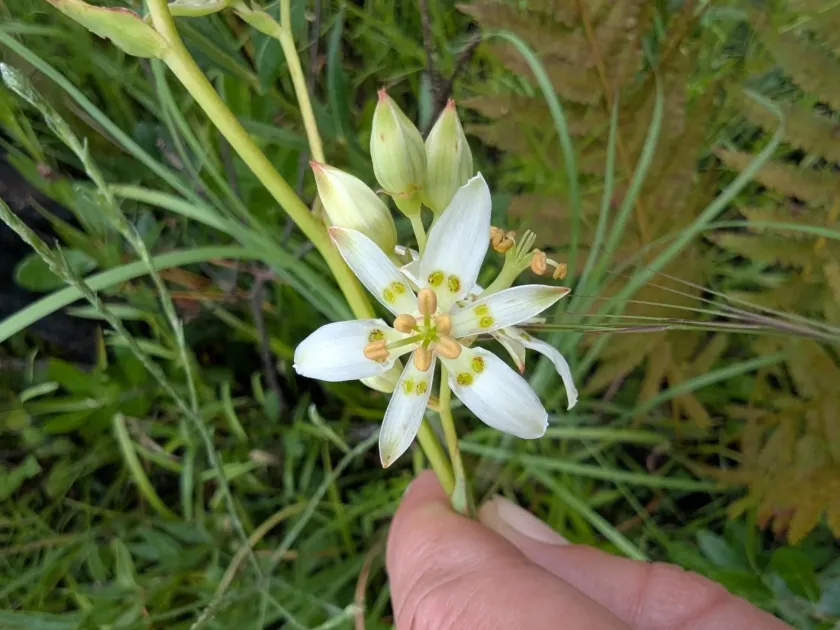
Zigadenus glaberrimus, commonly known as the large-flowered death camas, is a perennial herbaceous plant belonging to the Melanthiaceae family. It is native to the southeastern United States, where it thrives in moist, acidic, sandy soils and pine savannas.
The plant is defined by its robust rhizome and a basal rosette of long, strap-like leaves. The flowering stem can reach heights of nearly a meter, producing a panicle of star-shaped, white flowers during the summer months.
Cultivation requires specific environmental conditions. It demands consistently moist soil that maintains good drainage. Unlike many agricultural crops, this species is highly intolerant of drought and requires high humidity levels for optimal development.
The plant prefers full sun to partial shade. In its natural habitat, it is found in open areas where it receives ample light throughout the day, which is essential for the maturation of its complex inflorescence.
Soil management for this species focuses on maintaining a low pH level. It does not require high levels of synthetic fertilizer; instead, it benefits from the presence of organic peat or leaf mold that mimics its natural ecosystem.
Main diseases and pests
A major concern regarding this plant is its extreme toxicity. It contains steroidal alkaloids, which are lethal to livestock and dangerous to humans. Therefore, it is strictly categorized as a non-forage species in any agricultural context.
Fungal pathogens represent the most significant threat to plant health, particularly root rot caused by poor soil drainage. Protection against soil-borne pests is essential if attempting to grow this species in controlled conditions.