
Zantedeschia pentlandii
Zantedeschia pentlandii (W. Watson) Wittm.
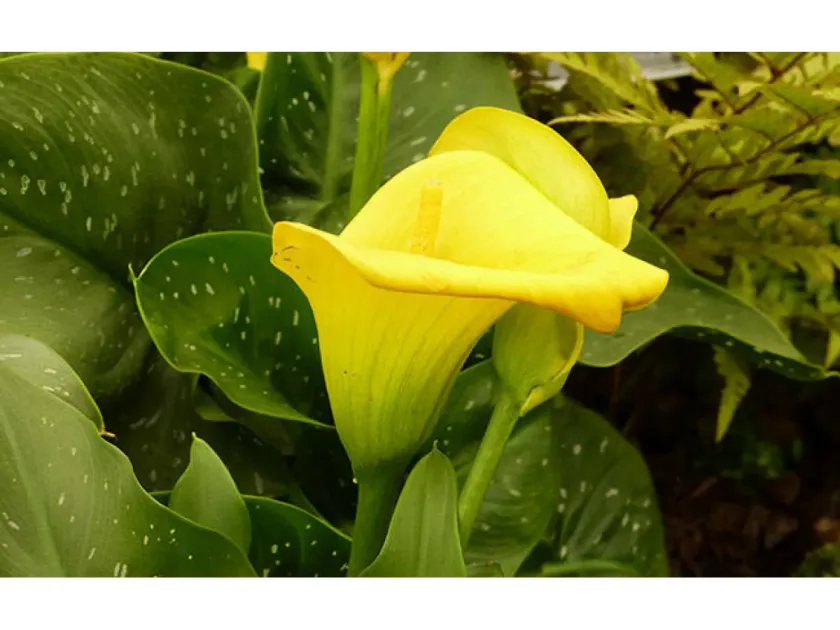
Description
Sowing dates
Planting of Zantedeschia pentlandii tubers is best performed in the spring, once the danger of ground frost has completely passed and soil temperatures have risen.
For earlier flower production, tubers can be started in pots indoors during late winter, provided they are kept in a well-lit and temperate environment.
It is essential to place tubers with the growth buds facing upwards, burying them at a depth of approximately 5 to 10 centimeters depending on tuber size.
Spacing should be adequate, typically 30 to 45 centimeters apart, to facilitate good air circulation around the foliage and prevent microclimate issues.
Pre-planting treatment with an appropriate fungicide is highly recommended to protect the tubers from soil-borne pathogens during the establishment phase.
Growing requirements
As a member of the Araceae family, this species originates from South Africa and thrives in bright, filtered light to maintain its vibrant yellow spathes.
The ideal growing medium is a well-draining, nutrient-rich soil with a slightly acidic pH, which supports healthy root development and robust growth.
While the plant requires regular irrigation during its growing cycle, it is highly sensitive to waterlogged conditions which can lead to rapid tuber decay.
The plant benefits from moderate fertilization with a balanced mix during the active vegetative stage to support the development of high-quality flowers.
Maintenance of stable temperatures, ideally between 20 and 25 degrees Celsius during the day, is crucial for optimal photosynthesis and bloom duration.
Main diseases and pests
Bacterial soft rot remains the most critical threat to Zantedeschia pentlandii, often triggered by excessive moisture and poor drainage in the potting mix.
Fungal pathogens such as grey mold can impact the flowers and leaves during periods of high humidity and stagnant air conditions in greenhouse environments.
Common horticultural pests, including aphids and spider mites, often infest the foliage and can significantly stunt growth if left untreated by early intervention.
Integrated pest management strategies should be employed, focusing on regular monitoring and the use of targeted acaricides or insecticides when necessary.
Sanitation practices, such as removing infected plant parts and cleaning tools, are vital to preventing the spread of diseases within the cultivation area.