
Zantedeschia elliottiana
Zantedeschia elliottiana (W. Watson) Engl.
Description
Growing requirements
Zantedeschia elliottiana, commonly known as the golden calla lily, is a tuberous perennial plant belonging to the Araceae family. Native to South Africa, it has become a staple crop in the global floriculture industry due to its striking appearance.
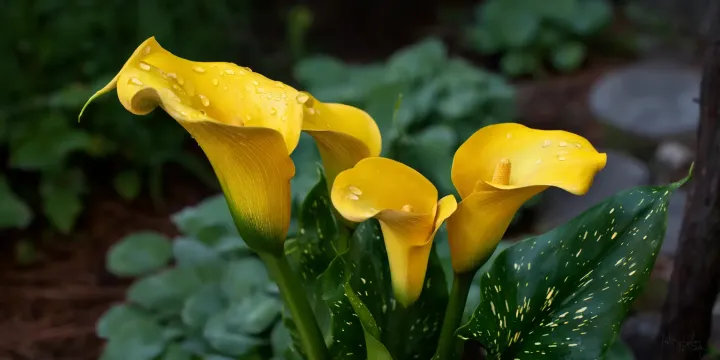
The plant features distinct heart-shaped leaves often marked with translucent spots and large, vibrant yellow spathes that surround the spadix. These features make it highly desirable for both landscape gardening and high-end cut flower production.
Successful cultivation requires a well-draining, nutrient-rich soil substrate with a slightly acidic to neutral pH. Proper drainage is the most critical factor, as Zantedeschia tubers are extremely sensitive to waterlogging, which often leads to root rot.
Climatically, it thrives in warm temperatures ranging from 20°C to 25°C. It requires a significant amount of ambient light to bloom effectively, although harsh midday sun should be avoided in hotter regions to prevent leaf scorching.
The crop is utilized for various commercial purposes, including potted plant sales, high-value floral arrangements, and garden bedding. Its ability to retain aesthetic appeal after harvest makes it a preferred choice for international flower markets.
Main diseases and pests
The primary concern for growers of Zantedeschia elliottiana is Erwinia carotovora, the bacterium responsible for soft rot. This pathogen attacks the tuber, turning it into a mushy mass, and is exacerbated by excessive moisture and poor soil aeration.
Fungal issues such as Phytophthora root rot and Botrytis cinerea are common in high-humidity greenhouse environments. These diseases can cause severe losses if circulation and moisture levels are not strictly managed.
Pests like aphids, spider mites, and thrips are typical threats that feed on the sap of the plant. These pests not only weaken the crop but can also serve as vectors for various plant viruses, which are difficult to eradicate once established.
Root-knot nematodes are another significant threat, as they disrupt root function, leading to stunted growth and reduced flower quality. Implementing soil sterilization techniques is standard practice to mitigate these biological risks.
Integrated Pest Management (IPM) strategies, including biological controls and selective use of fungicides, are essential for professional production. Maintaining strict hygiene protocols throughout the growing cycle is key to preventing widespread disease outbreaks.