
Zamioculcas zamiifolia
Zamioculcas zamiifolia (Lodd.) Engl.
Description
Growing requirements
Zamioculcas zamiifolia, commonly known as the ZZ plant, is a hardy perennial belonging to the Araceae family. Native to Eastern Africa, this plant has evolved to thrive in rocky, low-nutrient environments, utilizing its thick, tuberous rhizomes to store significant quantities of water during droughts.
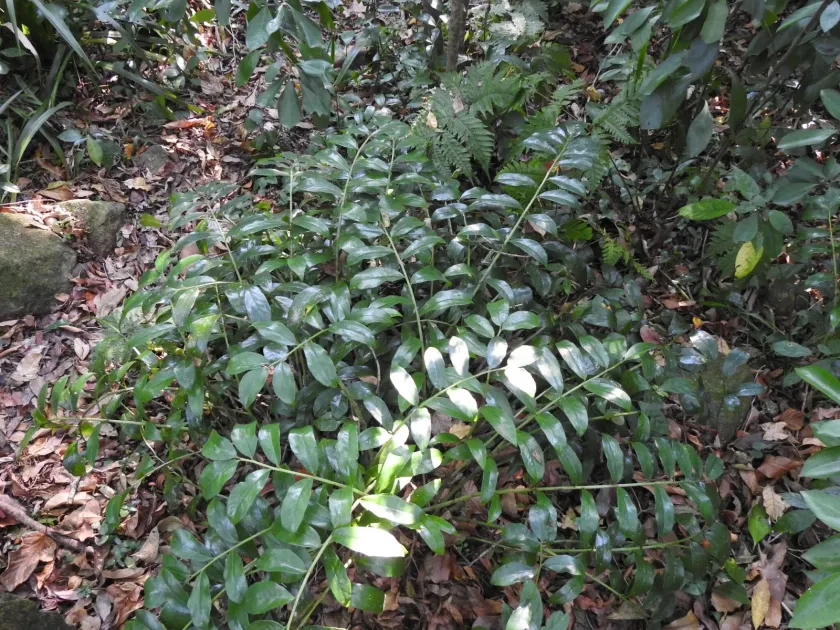
Botanically, the plant is characterized by its succulent, dark green, pinnate leaves that grow from subterranean tubers. It does not have a true aerial stem; rather, what appears to be the stem is a leaf stalk, or petiole, designed for both photosynthetic efficiency and water storage.
Successful cultivation requires a porous, well-draining substrate. A mix designed for cacti or succulents is standard, often supplemented with perlite or coarse sand to ensure that moisture does not accumulate around the tuberous root system.
The species is remarkably adaptable to light conditions, ranging from low-light indoor environments to bright, indirect sunlight. While it can survive in deep shade, consistent growth rates are achieved under moderate, filtered light conditions.
Environmental requirements include a stable temperature range between 18°C and 26°C. While the plant can tolerate brief cold spells, it is sensitive to temperatures below 15°C, which can cause internal cell damage and disrupt its metabolic functions.
Yield
The commercial cultivation of Zamioculcas is primarily directed toward the ornamental plant market. It is highly valued by consumers and landscapers for its durability, air-purifying properties, and low-maintenance requirements in modern office and residential interiors.
Professional production focuses on achieving high-quality specimens with symmetrical, dense foliage. Fertilizer application is strictly controlled during the active growing season, utilizing balanced NPK solutions to promote healthy leaf development without forcing elongated, weak growth.
Propagation is primarily vegetative, utilizing either leaf cuttings or the division of rhizomes. In commercial greenhouses, temperature control is essential during the rooting phase to ensure high success rates and uniform plant development across the crop.
Plant yield, in this context, refers to the consistency of the final product and the visual appeal of the foliage. Proper pruning and orientation in the greenhouse space ensure that each plant receives balanced light exposure for aesthetic uniformity.
Due to its high resilience and tolerance for low light and low humidity during shipping, Zamioculcas has become a staple product for global horticultural trade, maintaining high commercial value across various climatic zones.
Main diseases and pests
The most significant threat to Zamioculcas is the development of root and rhizome rot, primarily caused by overwatering. Excess moisture in the root zone creates an environment conducive to fungal pathogens like Pythium and Phytophthora, which destroy the tuberous system.
Pest management is focused on controlling sucking insects, particularly scale insects, mealybugs, and spider mites. These pests thrive in dry indoor environments and can quickly weaken the plant if left unchecked, causing yellowing and stunted growth.
Chemical control measures include the application of systemic insecticides or horticultural oils. For persistent infestations, a rigorous treatment cycle is required to break the reproductive cycle of the pests.
Preventative measures are the most effective management strategy. This includes maintaining strict irrigation intervals, ensuring pots have adequate drainage holes, and quarantining new stock to prevent the introduction of common indoor plant pests.
If symptoms of rot occur, intervention involves removing the affected parts of the rhizome and applying a fungicide or charcoal dust to the wound. The plant should then be repotted into dry, sterile media to promote healing before resuming a light watering schedule.