
Dacrydium biforme
Dacrydium biforme
Description
Growing requirements
Dacrydium biforme is an evergreen conifer belonging to the Podocarpaceae family. It is endemic to New Zealand, primarily found in subalpine forests and scrubland, showcasing a remarkable ability to survive in harsh, windswept environments.
This species requires high atmospheric moisture and cool temperatures to thrive. It is typically found in habitats with high rainfall, where the soil consists of acidic, nutrient-poor, and organic substrates derived from peat or weathered rock.
A crucial horticultural requirement for Dacrydium biforme is excellent soil drainage. The root system is sensitive to waterlogging, which often results in fungal issues; therefore, planting in raised beds or well-draining mineral soil is essential.
The plant is known for its slow growth rate, making it a long-term investment for any arboretum or specialized botanical collection. It adapts well to low-nutrient soils, and heavy fertilization is generally discouraged for this species.
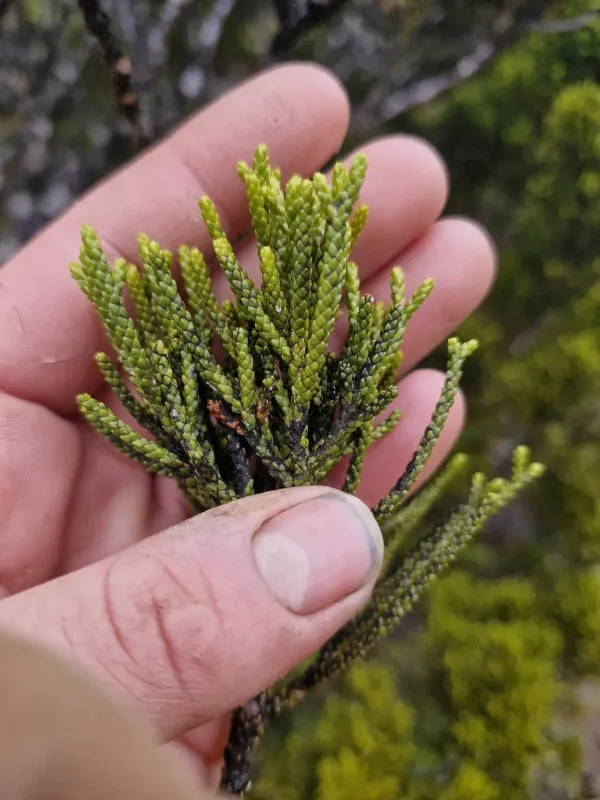
Its botanical defining feature is the dimorphic foliage: young plants possess needle-like leaves, while mature trees exhibit scale-like foliage. This distinct transition reflects its adaptation to changing environmental conditions throughout its lifecycle.
Harvesting
Commercial utilization of Dacrydium biforme is negligible, as it is primarily valued for its botanical uniqueness rather than timber production. The species is preserved within its native New Zealand ecosystems.
In ornamental horticulture, it is highly sought after by collectors for rock gardens and cold-climate landscapes. Its architectural, slow-growing nature makes it a valuable asset for maintaining a stable, long-lasting garden aesthetic.
Propagation is primarily handled by specialized nurseries. Cuttings are the most common method for ensuring genetic consistency, although the process requires strictly controlled humidity and temperature to succeed.
Maintenance involves routine monitoring for pathogens, particularly those that thrive in high-humidity environments. Pruning should be limited to the removal of dead or damaged branches to maintain plant health.
Seed collection is limited to conservation and botanical research purposes. Because the tree produces seeds irregularly, successful propagation depends on monitoring the specific fruiting cycle of local wild populations.