
Yabea microcarpa
Yabea microcarpa
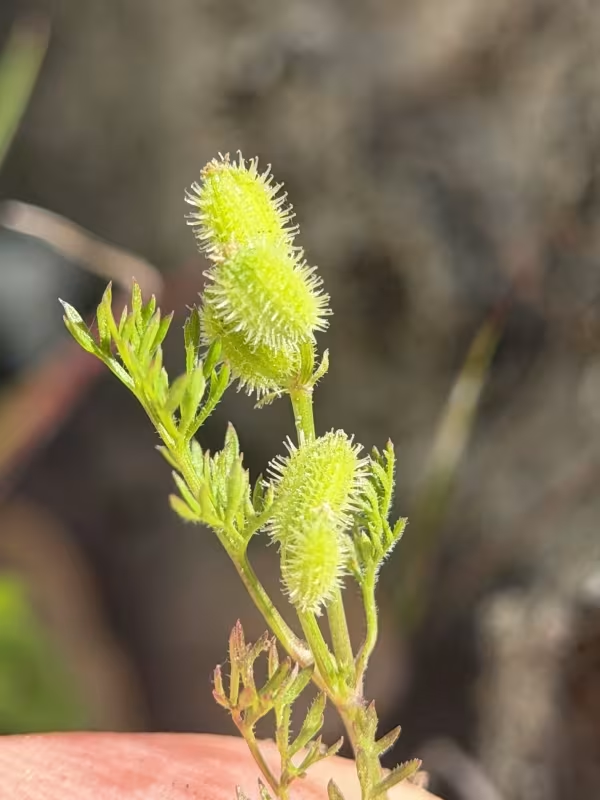
Description
Sowing dates
Yabea microcarpa is an annual herb that completes its life cycle within the favorable windows provided by seasonal precipitation. Germination typically occurs during late autumn or winter, triggered by the first rains of the year.
The plant demonstrates a rapid growth phase during early spring, capitalizing on the availability of soil moisture before the onset of the characteristic Mediterranean summer drought of its native range.
Seed dispersal is facilitated by the plant's unique fruit structures, which are adapted for attachment to passing animals. This ensures the effective distribution of seeds across suitable habitats during the dormant season.
Cultivation practices for this species are non-existent as it is not a commercial agricultural crop. Propagation occurs entirely through natural seeding, with the plant relying on the soil seed bank to ensure future generations.
Understanding the germination timing is essential for ecological conservation. The timing is precise, as the species must establish itself quickly enough to compete with other early-season ephemeral plants in its environment.
Growing requirements
Yabea microcarpa, a member of the Apiaceae family, thrives in well-drained soils, often found in rocky meadows or slopes. It avoids heavy clay soils where water stagnation can lead to root system failure.
The species requires a climate with mild, wet winters and warm, dry summers. It is well-adapted to the specific environmental conditions of western North America, particularly in open woodland or grassland settings.
Light requirements are significant; the plant prefers full sun to light shade. Adequate light exposure is critical for the plant to successfully reach its reproductive stage and produce viable seeds before death.
Soil nutrient levels should be moderate. While the plant is quite hardy, it thrives best in environments where competition from taller, invasive vegetation is minimal, allowing for optimal access to light and resources.
Morphological features, such as finely divided leaves and small umbels, allow the plant to minimize water loss and maximize photosynthetic efficiency during the brief period of active growth in the spring.
Main diseases and pests
Invasive weed species pose a significant threat to Yabea microcarpa populations. Fast-growing, non-native grasses can easily outcompete this slender annual for essential resources such as space and sunlight.
Various aphids and sap-sucking insects are potential pests. By feeding on the plant's delicate stems and leaves, these insects can weaken the plant, leading to reduced reproductive output and stunted growth.
Fungal pathogens such as powdery mildew represent a disease risk, especially during periods of unseasonably high humidity. Such infections can decimate dense patches of the plant by compromising tissue integrity.
Large-scale land disturbance and intensive livestock grazing can significantly reduce the local population density. Physical damage to the plants prevents them from completing their life cycle and contributes to soil compaction.
Loss of habitat due to urbanization and human development remains the primary long-term threat to the survival of the species, as it relies on specific, relatively undisturbed micro-environments to flourish.