
Xymalos monospora
Xymalos monospora
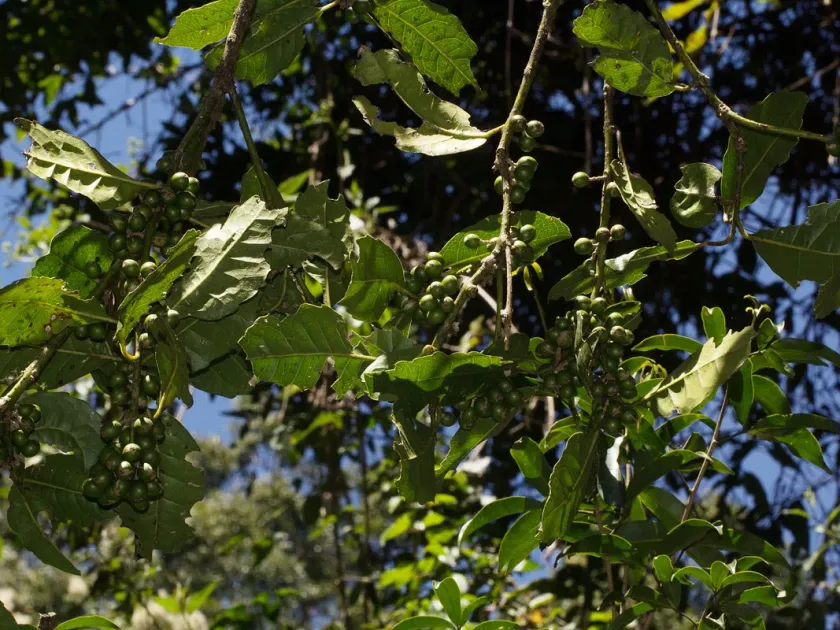
Description
Growing requirements
Xymalos monospora is an evergreen tree species belonging to the Monimiaceae family. It is recognized as the only species within its genus, making it a significant subject for botanical study in the context of African montane forests.
The tree originates from the moist montane regions of Africa and thrives in environments with high precipitation and fertile, well-drained soil. It serves as a vital component of the high-altitude forest canopy.
Regarding cultivation, the species requires steady climatic conditions, preferably within tropical mountain ranges. Young specimens demand shaded conditions, whereas mature trees require sufficient space for canopy development.
Botanically, it is characterized by its robust growth habit, reaching heights of up to 30 meters. Its foliage and reproductive structures follow the unique patterns typically found in members of the Monimiaceae family.
Economically, the wood of Xymalos monospora is highly regarded for its durability and grain, which are utilized in the timber industry. Additionally, local communities traditionally utilize its biological components for medicinal purposes.
Main diseases and pests
The primary threats to Xymalos monospora are rooted in habitat loss caused by deforestation and agricultural expansion in mountainous African ecosystems.
While specific pests are not extensively documented in global agricultural literature, the species can be susceptible to root rot and fungal pathogens if grown in areas with poor drainage.
Environmental changes, including increasing temperatures and shifting rainfall patterns, pose a long-term risk to the native range of this tree species.
Invasive species may compete with young Xymalos trees for light and essential nutrients, further hindering the natural regeneration of forest patches.
Active conservation and sustainable forest management practices are essential to prevent the decline of this unique species in its natural mountainous habitats.