
Xeronema callistemon
Xeronema callistemon
Description
Growing requirements
Xeronema callistemon is a distinctive perennial herb belonging to the monotypic family Xeronemataceae. It is native to the rocky island habitats of New Zealand and New Caledonia, where it thrives in challenging, nutrient-poor, but well-drained environments.
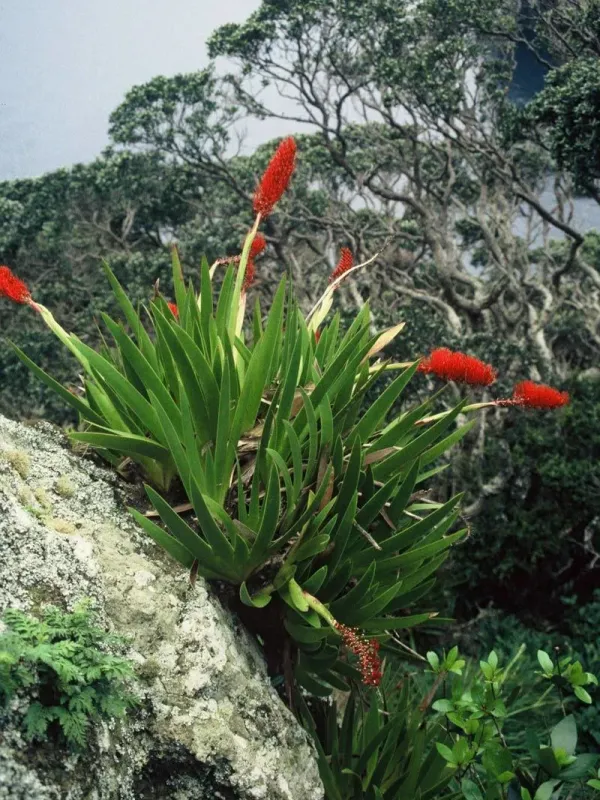
The plant is famously known for its striking inflorescences, which resemble a bottle brush, characterized by vibrant red flowers arranged on a horizontal spike. Its foliage is composed of rigid, sword-shaped leaves arranged in a fan-like basal rosette, providing year-round visual appeal.
Regarding growth requirements, this species demands excellent drainage and a loose, gritty substrate to prevent root rot. It flourishes in full sun to partial shade, requiring significant air circulation to replicate the coastal cliff conditions of its native habitat.
Climatically, it prefers a temperate environment with moderate humidity. While it can withstand periods of dryness, it is not frost-tolerant and must be protected in colder regions, making it a popular subject for greenhouse and indoor conservatory cultivation.
Economically, Xeronema callistemon serves primarily as an ornamental specimen in high-end horticulture. It is highly sought after by botanical collectors and landscape designers looking to introduce rare, visually arresting flora into specialized garden displays.
Main diseases and pests
The most significant threat to the health of the plant is root system decay, typically triggered by waterlogging or poor substrate aeration. Maintaining a strict watering schedule is essential for preventing fungal infections in the crown and root zones.
In managed cultivation, common greenhouse pests such as scale insects and spider mites can infest the foliage. Regular monitoring and the application of integrated pest management practices are recommended to protect the integrity of these valuable plants.