
Xeroderris stuhlmannii
Xeroderris stuhlmannii
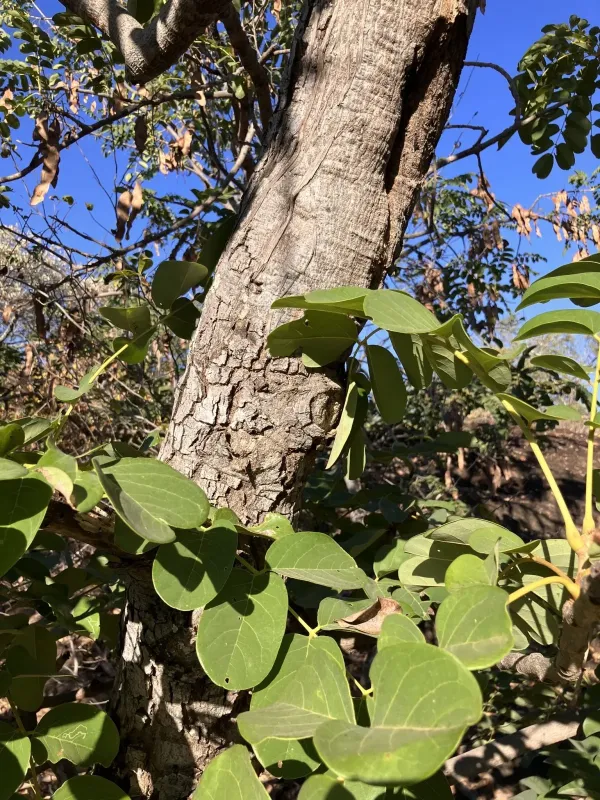
Description
Sowing dates
Propagation of Xeroderris stuhlmannii is primarily done through seeds collected from dry, mature pods. Due to their hard seed coat, scarification is necessary to ensure uniform and quick germination.
Sowing should ideally coincide with the onset of the rainy season to provide the seedlings with a consistent moisture supply during the critical establishment phase.
Nursery-grown seedlings are often preferred over direct seeding to ensure higher survival rates and protection from environmental stressors during early development.
Planting density should be carefully planned based on the intended use, whether for timber production, soil restoration, or as a shade tree in agroforestry systems.
Adequate space must be provided between individuals to prevent overcrowding, as the tree develops a wide canopy as it matures.
Growing requirements
Xeroderris stuhlmannii belongs to the Fabaceae family and is native to the dry tropical forests and wooded savannas of sub-Saharan Africa.
The species is highly adapted to arid conditions and thrives in well-drained sandy or loamy soils, making it an excellent candidate for rehabilitating degraded landscapes.
As a light-demanding species, it requires full sun exposure for healthy growth and canopy development, particularly in the sapling stage.
It displays high tolerance to heat and seasonal drought, which are characteristic of its native habitat, allowing it to survive periods of extreme water scarcity.
The tree is deciduous and sheds its leaves during the peak dry season, a strategic adaptation to reduce water loss and conserve vital resources.
Yield
The most significant economic output from this tree is its high-quality timber, which is dense, durable, and naturally resistant to termite attacks.
Secondary products include leaves and fruit, which are widely utilized in traditional medicine and serve as a supplemental fodder source for livestock.
The flowers are an important resource for local pollinators, supporting biodiversity and fostering local apiculture activities within the plantation areas.
While timber harvesting requires a long-term approach, the tree provides continuous ecological benefits, including nitrogen fixation in the soil.
Harvesting strategies should focus on sustainable management to ensure the longevity of the stand and consistent production of plant-based materials.
Main diseases and pests
Young plants are highly susceptible to herbivory by wild grazers, making the protection of saplings with guards or fences an essential agricultural practice.
Root rot diseases may occur in areas with poor drainage, especially if heavy rains lead to prolonged soil waterlogging around the root zone.
Seed-boring insects represent a threat to seed viability; therefore, proper treatment and storage are required for harvested seeds intended for planting.
Uncontrolled wildfires in savannas present a constant danger to young trees that have not yet developed the thick bark characteristic of mature specimens.
Habitat loss due to land clearing for agriculture remains a major threat to the survival of wild populations of this species.