
Annual everlasting
Xeranthemum annuum L.
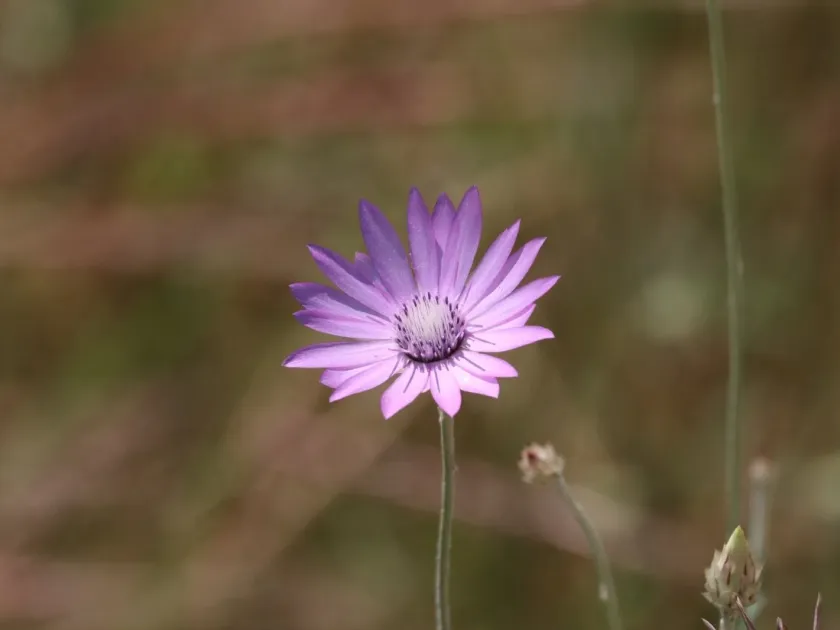
Description
Sowing dates
The annual everlasting (Xeranthemum annuum L.) is typically sown directly into the open field, as the plant has a taproot system that does not tolerate transplanting well. The optimal time for sowing is late April or early May when the soil has warmed sufficiently.
For earlier production, a seedling method using peat pots is acceptable. Seeds should be sown in March, ensuring good drainage and moderate lighting to prevent the seedlings from becoming leggy.
Transplanting seedlings to the final site is performed at the 3-4 true leaf stage. With proper temperature control, seedlings emerge within 10-14 days after sowing.
The sowing density must allow for adequate air circulation to prevent fungal diseases. A spacing of at least 20-25 cm between plants and up to 40 cm between rows is recommended.
Choosing weed-free plots is essential, as young everlasting plants grow slowly and can be easily suppressed by fast-growing weeds during the early stages of development.
Growing requirements
Annual everlasting belongs to the Asteraceae family. It is a heat-loving and sun-loving plant native to the Mediterranean region, requiring open, sunny locations for optimal development.
The crop has moderate soil requirements. Best results are achieved on light, well-drained, calcareous, or neutral soils with a low level of organic matter.
The plant is extremely sensitive to waterlogging and poor soil drainage. Excess moisture in the root zone quickly leads to root rot and the death of the plants.
Its drought tolerance is a key biological trait, allowing the plant to thrive even under conditions of limited rainfall during the summer months.
Agronomic management includes minimal fertilization, as excess nitrogen promotes vegetative growth at the expense of floral quality, which is critical for the dried flower market.
Main diseases and pests
The primary threats to this crop are pathogens that thrive in high humidity. Powdery mildew frequently infects leaves and stems if air circulation is insufficient.
Root rots, including Fusarium, can cause sudden wilting. To prevent these diseases, strict crop rotation and avoiding overly dense plantings are necessary.
Aphids pose the greatest threat, often infesting delicate flower heads during the budding stage, leading to deformation of the flowers and loss of commercial value.
Spider mites may damage the plants during periods of severe drought by sucking sap from the leaves. Regular scouting and the application of acaricides are recommended when necessary.
Minimizing chemical interventions is possible by ensuring good site ventilation and the prompt removal of infected plants to stop disease spread.
Harvesting
Harvesting for dried flower production is performed when the flower heads are semi-opened, with the central petals still tightly closed.
Delaying the harvest leads to flowers opening completely during the drying process, which causes them to lose their shape and makes the petals brittle.
Harvesting should ideally occur on a dry, sunny day in the early afternoon, ensuring all dew has evaporated to prevent mold during the drying process.
Stems are tied into small bunches and hung upside down in a dark, dry, and well-ventilated room. Direct sunlight during drying is avoided to prevent fading.
Once dried, the flowers retain their natural color and structural integrity, making them highly valued for professional floristry and decorative craft projects.