
Xanthogalum purpurascens
Xanthogalum purpurascens
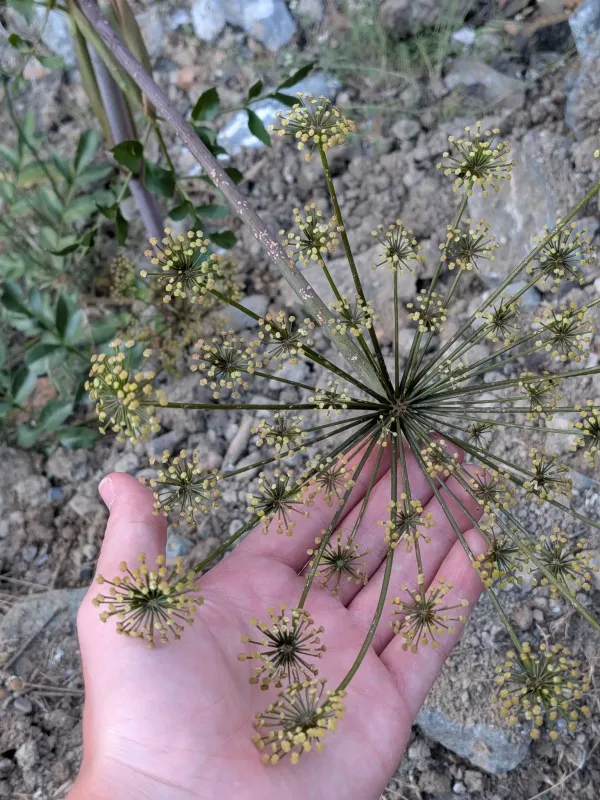
Description
Growing requirements
Xanthogalum purpurascens is a perennial herbaceous plant belonging to the Apiaceae family. Originally native to mountain ranges and rocky slopes, it has evolved to thrive in environments with significant temperature fluctuations and nutrient-poor soil compositions.
The plant exhibits a robust taproot system, which serves as a primary adaptation to drought. From an agronomic perspective, it requires well-drained, porous soils, ideally sandy loams, to prevent root hypoxia during periods of increased rainfall.
Climatic requirements involve full exposure to sunlight. Xanthogalum is highly sensitive to soil stagnation; therefore, field selection should focus on elevation or slopes that promote natural drainage and air circulation.
The development of the plant follows a biennial to perennial cycle, depending on the cultivar and environmental conditions. It is particularly valued in niche agricultural sectors for its secondary metabolites, including coumarins, which are utilized in medicinal formulations.
Cultivation practices include row spacing to allow for mechanical weeding and proper ventilation. Because of its ecological niche, it is generally resistant to standard garden pests, though careful monitoring for soil-borne pathogens during the seedling stage is recommended.