
Vietnamese golden cypress
Xanthocyparis vietnamensis
Description
Growing requirements
The Vietnamese golden cypress (Xanthocyparis vietnamensis) is a rare coniferous tree species belonging to the Cupressaceae family. It was first described in the early 21st century and remains a highly specialized plant endemic to the limestone mountains of northern Vietnam.
This species requires specific environmental conditions, primarily growing in rocky, limestone-rich soils at elevations ranging from 900 to 1,200 meters. A cool, moist mountain climate with frequent cloud cover is essential for its natural development and physiological stability.
Cultivation of this species is challenging due to its sensitivity to soil moisture and drainage. The plant requires excellent aeration in the root zone to prevent fungal pathogens from taking hold. It is not suitable for heavy, waterlogged, or clay-based soils.
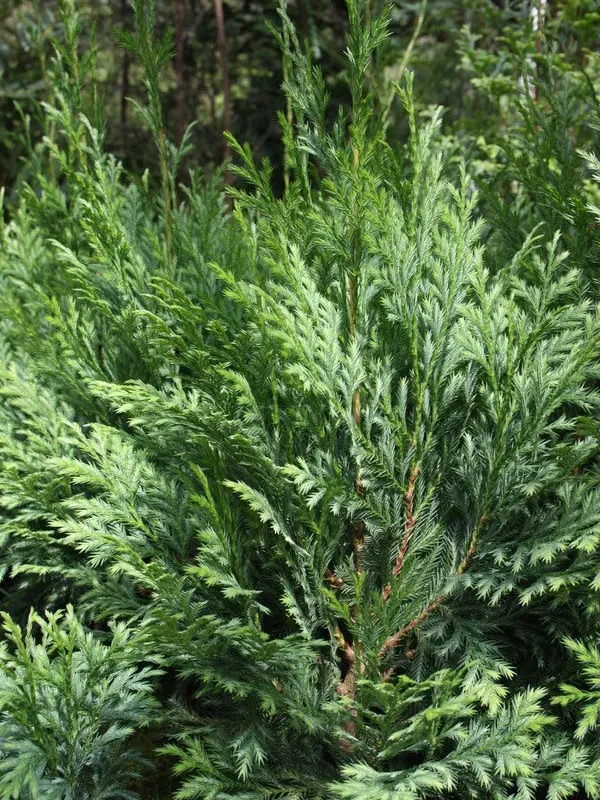
Botanically, it is distinguished by its dimorphic foliage, which transitions from needle-like on juvenile branches to scale-like on mature ones. The tree typically reaches a height of 10 to 15 meters, exhibiting a graceful, narrow conical growth habit.
While the economic utility for timber production is nil due to its conservation status, the species is highly valued in botanical research and ex-situ conservation programs. It serves as a flagship species for the study of tropical karst ecosystems.
Main diseases and pests
The main threats to the species include habitat destruction, illegal logging, and climate change that alters the humidity levels in its limited mountain range. In artificial cultivation, excessive moisture remains the primary risk factor for plant mortality.
Common pests and diseases affecting the genus Cupressaceae can also impact this tree if hygiene protocols are not followed. Key management strategies focus on maintaining optimal drainage, air circulation, and avoiding the introduction of soil-borne pathogens in nursery environments.