
Texas sleepydaisy
Xanthisma texanum DC.
Description
Sowing dates
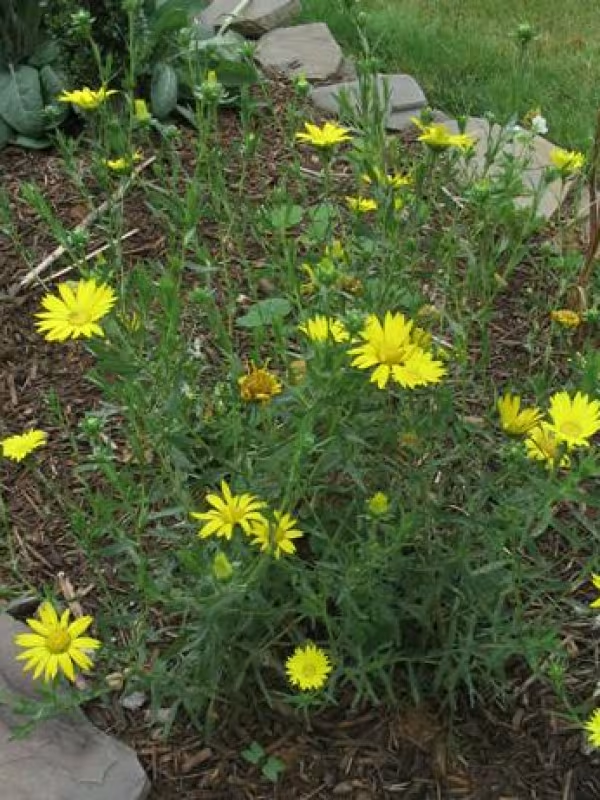
Texas sleepydaisy (Xanthisma texanum) is an herbaceous flowering plant belonging to the Asteraceae family, native to the diverse landscapes of Texas and neighboring regions in the United States.
Seeds should be sown directly into the prepared field once all danger of frost has passed, as the seedlings are quite sensitive to low temperatures during their initial growth phase.
The optimal placement for this crop involves selecting sites that receive full sun throughout the day, as this promotes healthy vegetative growth and robust flower bud formation.
The soil surface should be lightly raked before broadcasting the seeds, as the small seeds require light exposure to break dormancy and trigger successful germination.
For growers using greenhouse methods, starting the seeds in individual cells ensures a high transplanting success rate, provided the root systems are not disturbed during transfer.
Growing requirements
This species is highly adapted to arid environments, making it an excellent candidate for xeriscaping or areas where water conservation is a critical management priority.
Well-draining, sandy or gravelly soils are mandatory, as the root system is prone to rot in waterlogged or heavy clay conditions, especially during periods of high humidity.
The plant thrives in nutrient-poor to average soil types, which helps to maintain a compact growth habit and prevents the plants from becoming leggy or overly succulent.
Minimal fertilization is required, as the species has evolved to extract necessary minerals from sparse desert environments without the need for intensive nitrogen applications.
Wind tolerance is another significant advantage, allowing this crop to flourish in open fields where other ornamental species might suffer physical damage or moisture loss.
Main diseases and pests
While generally hardy, the crop can be susceptible to fungal pathogens if exposed to excessive humidity, particularly powdery mildew during periods of low airflow.
Common pests include aphids, which may cluster on the undersides of leaves or developing buds, potentially distorting growth and reducing the aesthetic quality of the blooms.
Root-knot nematodes can occasionally cause issues in specific soil types, making crop rotation or soil solarization a recommended practice for commercial producers.
Monitoring for signs of herbivory by local wildlife or insects is essential, as young seedlings are particularly attractive to pests during their establishment phase in the field.
Integrated Pest Management (IPM) strategies, including the use of beneficial insects and selective applications of organic controls, are highly effective for managing these typical threats.
Harvesting
The primary utility of the Texas sleepydaisy is ornamental; however, successful seed harvesting is crucial for maintaining the variety and ensuring a steady supply for future seasons.
Harvesting should be timed for when the seed heads turn a dull brown color and begin to lose their petals, signaling that the embryos have reached full physiological maturity.
Care must be taken when collecting the seeds to prevent premature shattering, as the wind-dispersal mechanism of this species can result in significant yield losses if left too long.
Once collected, seeds should be dried in a cool, dark environment with low humidity to preserve viability and prevent the onset of mold growth during long-term storage.
Regular maintenance during the growing cycle, such as thinning or deadheading, optimizes plant vigor and ensures higher quality yields during the seed maturation period.