
Wrightia antidysenterica
Wrightia antidysenterica (L.) R. Br.
Description
Growing requirements
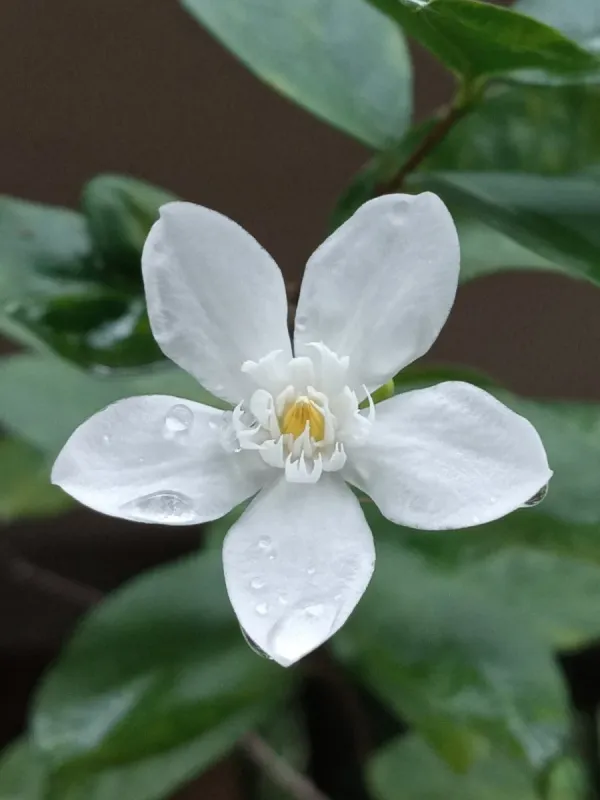
Wrightia antidysenterica, commonly known as Arctic snow or Milky way, is a dense evergreen shrub belonging to the Apocynaceae family. Native to tropical regions of South and Southeast Asia, it is highly valued for its striking white flowers and its historical application in traditional medicine for treating various ailments.
The plant thrives in warm, tropical climates and requires high levels of ambient light to flower consistently. While it enjoys full sunlight, in hotter regions, afternoon shade is recommended to prevent leaf scorching. It is strictly a non-hardy species that must be kept above +15°C for optimal growth performance.
Cultivation requires well-draining, fertile soil rich in organic matter. A pH range between 6.0 and 7.0 is ideal. The root system is sensitive to waterlogging, so containers must have sufficient drainage holes. Watering should be deep but infrequent enough to allow the top layer of the soil to dry out slightly between sessions.
Maintenance involves routine pruning to maintain a compact shrub shape and encourage new growth. Fertilization with a balanced slow-release fertilizer or liquid feeds high in phosphorus during the growing season enhances the quantity and longevity of blooms, which are a hallmark of this species.
Propagation is typically achieved through semi-hardwood cuttings. Using a rooting hormone and maintaining a high-humidity environment under plastic or glass allows for successful propagation. The process usually takes about a month, after which the plants can be hardened off and moved to larger pots.
Main diseases and pests
The most common pests affecting Wrightia antidysenterica include scale insects, aphids, and spider mites. These pests thrive in indoor environments with low humidity. Regular misting and inspecting the undersides of leaves can significantly reduce the risk of infestation and promote plant vigor.
Fungal issues such as root rot can occur if the substrate remains saturated for extended periods. To mitigate this, ensure proper aeration of the root zone and avoid wetting the foliage excessively, especially during cool evenings, to prevent the onset of leaf spot diseases.