
Wolffia arrhiza
Wolffia arrhiza (L.) Horkel ex Wimm.
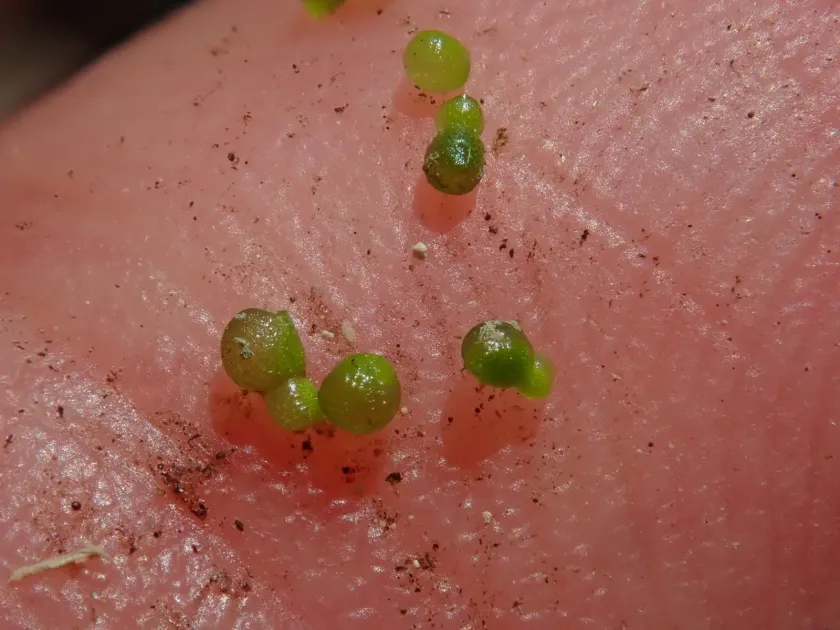
Description
Sowing dates
Wolffia arrhiza, commonly known as water meal, is the world's smallest flowering plant belonging to the Araceae family. This rootless, leafless aquatic plant consists of tiny green thalli that float on the water surface and reproduce through vegetative budding.
Cultivation begins by introducing starter cultures into managed water systems. The initial stocking density is critical; it should be sufficient to initiate rapid colonization without creating immediate competition for essential nutrients within the growth medium.
The optimal season for establishing outdoor populations is during warm, stable weather when water temperatures consistently exceed 20°C. In closed-loop agricultural systems, sowing can be conducted year-round, provided light and heat parameters are strictly maintained.
For industrial production, hydroponic trays or shallow ponds are used. The "sowing" process involves evenly distributing the starter biomass across the water surface, ensuring every thallus has adequate access to sunlight for immediate photosynthetic activity.
Given its ability to double its biomass in as little as 48 to 96 hours under ideal conditions, careful management of the initial planting density is necessary to maximize efficiency while preventing overcrowding that could hinder metabolic processes.
Growing requirements
Wolffia requires a nutrient-rich environment, specifically high levels of nitrogen and phosphorus. The water chemistry must be carefully balanced to prevent the growth of competitive filamentous algae while supporting the rapid development of the water meal.
Temperature control is vital; the plant thrives between 22°C and 28°C. Temperatures below 15°C significantly slow growth, while sustained temperatures above 35°C can cause severe cellular stress, leading to the rapid decay of the entire colony.
Light intensity is the primary driver of growth. While the plant requires high light levels for optimal protein synthesis, it must be protected from extreme direct sunlight which can cause photoinhibition and chlorophyll degradation.
The pH level of the water should remain slightly alkaline, between 6.5 and 8.0. Regular monitoring of water quality is essential, as the accumulation of metabolic byproducts or changes in chemical balance can lead to stunted growth and reduced nutritional quality.
Aeration and gentle water movement are beneficial to ensure oxygen availability and nutrient distribution. However, strong currents or turbulence should be avoided as they can mechanically damage the delicate thalli and disrupt the floating colony structure.
Yield
Wolffia arrhiza is highly valued for its exceptional protein content, which can reach up to 40% of its dry matter. This makes it an ideal candidate for sustainable protein production in aquaculture and livestock feed industries.
Yields are measured by the rapid accumulation of biomass. Under intensive management with optimal fertilization and light, annual yields can reach 10 to 20 metric tons of dry weight per hectare, significantly outperforming many traditional land-based crops.
Successive harvesting is essential to maintain high productivity. By regularly thinning the colony, growers can ensure that the remaining plants stay in their exponential growth phase, thus maximizing the total output over a production cycle.
The nutritional profile of the harvested biomass is influenced by the fertilizer regime. Nitrogen-rich media specifically enhance protein content, providing a high-quality feed source that is rich in essential amino acids, vitamins, and minerals.
Due to its high water content, harvested biomass must be processed efficiently. Drying technology plays a crucial role in maintaining the integrity of the protein structures, ensuring the final product remains a viable high-value ingredient for animal nutrition.
Main diseases and pests
The most significant threat to production is contamination by filamentous algae and other aquatic weeds. These organisms compete for resources and can quickly overwhelm the Wolffia, making the harvesting process complex and reducing the quality of the final crop.
Bacterial and fungal pathogens can pose a risk in stagnant water or when water quality is poorly maintained. Infections usually manifest as the whitening or softening of the thalli, which necessitates the immediate removal of affected sections.
Small aquatic pests and larvae can negatively impact yields in open-pond systems. Integrated pest management strategies, focusing on biological controls rather than synthetic pesticides, are preferred to maintain the crop's organic integrity.
Environmental stressors such as rapid temperature fluctuations or inadequate light supply can cause chlorosis. This physiological condition not only reduces biomass growth but also leaves the crop more susceptible to opportunistic secondary infections.
Water quality degradation, particularly the accumulation of heavy metals or sudden shifts in pH, can be toxic to the plant. Strict adherence to water treatment protocols is required to protect the crop and ensure it meets safety standards for feed use.
Harvesting
Harvesting is performed using fine-mesh netting or automated skimming systems that pull the floating biomass from the water surface. This process must be systematic to ensure the colony is not over-harvested.
Post-harvest processing involves thorough cleaning to remove any debris or incidental organisms. The speed at which this is done determines the shelf-life and nutritional stability of the fresh crop before it is either used or sent for drying.
Drying is typically accomplished through low-temperature air drying or freeze-drying. These methods are preferred because they preserve the amino acid profile and prevent the denaturation of proteins caused by excessive heat exposure during processing.
For immediate use in aquaculture, fresh biomass can be fed directly to fish. This approach is highly efficient as it eliminates the costs associated with drying, though it requires proximity between the production site and the feeding area.
A structured harvest schedule is the cornerstone of profitable Wolffia farming. By aligning harvesting cycles with the plant's rapid growth rate, producers can ensure a consistent supply of high-quality biomass throughout the growing season.