
White weeping broom
Retama monosperma (L.) Boiss.
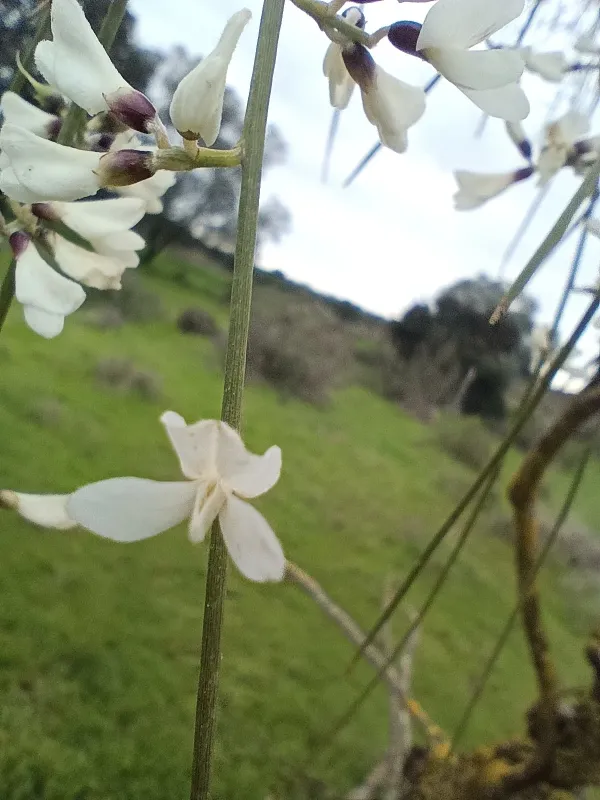
Description
Sowing dates
Seeds of Retama monosperma require scarification to improve germination due to their hard seed coat. Sowing can be performed directly into the soil at the final site or into containers for subsequent transplanting.
The best time for sowing in temperate zones is early spring, once the threat of heavy frost has passed. In arid regions, planting is often timed to coincide with the beginning of the rainy season to ensure seedling establishment.
Planting depth should be approximately 2 to 3 centimeters to ensure proper contact with the soil. Germination rates are high when soil temperatures are maintained between 20 and 25 degrees Celsius.
In natural habitats, propagation occurs through self-seeding, allowing the species to rapidly colonize open areas. When cultivated in nurseries, light, sandy substrates are recommended to avoid excessive moisture retention.
Spacing depends on the intended use; for windbreaks or hedges, plants should be placed 1 to 1.5 meters apart to allow for proper development of their unique, weeping canopy.
Growing requirements
Retama monosperma is a member of the Fabaceae family, highly adapted to the extreme conditions of sandy dunes and semi-desert environments. It shows remarkable tolerance to soil salinity and prolonged water scarcity.
This shrub prefers sandy or loamy soils with excellent drainage. It is highly sensitive to waterlogging and poor soil aeration, which can easily trigger root rot and other fungal diseases.
The plant is highly heliophilic and requires full sun exposure for optimal growth and flowering. It thrives under direct sunlight and can withstand intense heat without compromising its vitality.
As a nitrogen-fixing legume, it excels in nutrient-poor soils by forming symbiotic relationships with soil bacteria. Supplemental fertilization is generally unnecessary, though moderate phosphorus levels can support initial growth.
Its robust structure and wind resistance make it a prime choice for phytoremediation projects and the stabilization of moving sand dunes in coastal and arid landscapes.
Main diseases and pests
In its native habitat, Retama monosperma exhibits natural resistance to most pests and diseases. However, improper irrigation management, specifically waterlogging, is the primary cause of root health issues.
Occasional infestations of sap-sucking insects, such as aphids or spider mites, may occur, particularly in protected environments like greenhouses or if the plants are stressed by inadequate care.
Small rodents can pose a threat to young seedlings by gnawing on the tender bark and roots during seasons when alternative food sources are scarce in the desert environment.
To prevent disease outbreaks, nursery managers must ensure proper ventilation and strictly control irrigation frequency to keep the root zone oxygenated and free from pathogens.
Chemical control measures are rarely needed and should only be employed as a last resort in cases of severe infestation, while strictly adhering to local environmental safety guidelines.