
Welwitschia mirabilis
Welwitschia mirabilis
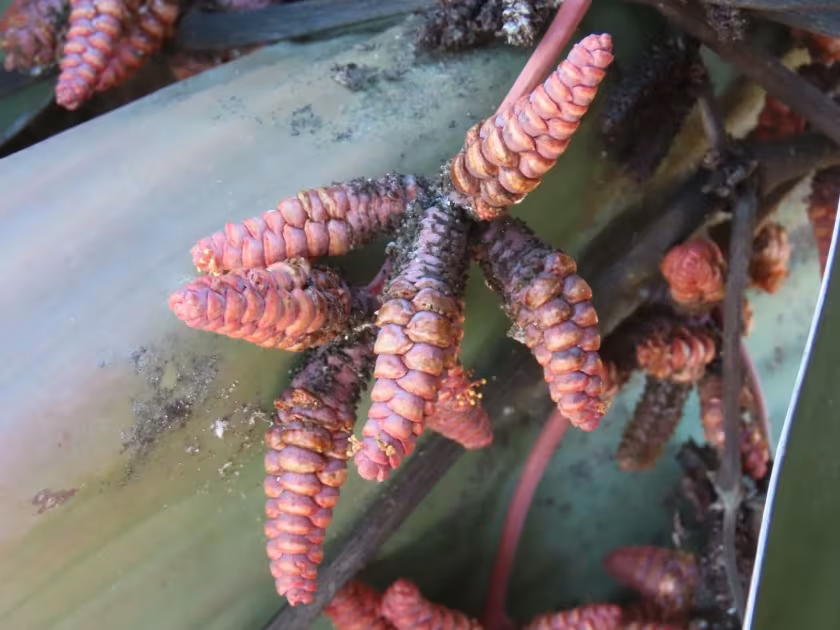
Description
Sowing dates
Seeds of Welwitschia mirabilis require specific conditions to germinate, as the process is highly dependent on humidity levels and substrate sterility in cultivation.
The seeds should be sown in a well-drained, sandy substrate and kept at a constant temperature between 25 and 30 degrees Celsius to ensure uniform emergence.
It is vital to treat seeds with fungicides before planting, as young seedlings are extremely susceptible to fungal pathogens that thrive in warm, moist environments.
Once the primary root emerges, it grows rapidly; therefore, deep pots are essential to accommodate the taproot and prevent stunted development in early stages.
Proper aeration is critical during the germination phase to maintain the health of the young plant before it transitions into its permanent arid habitat.
Growing requirements
Welwitschia mirabilis belongs to the monotypic Welwitschiaceae family and is an iconic botanical curiosity native to the Namib Desert.
The plant requires full, intense sunlight to maintain its physiological functions and to support the slow but steady growth of its two permanent leaves.
Soil composition must be extremely porous and mineral-based, strictly avoiding high organic content that could retain water and lead to rot.
While the plant is highly adapted to extreme drought, it relies on coastal fog as a primary moisture source, which must be simulated in indoor cultivation.
It requires a diurnal temperature fluctuation, simulating the vast differences between day and night temperatures found in its natural desert environment.
Main diseases and pests
The most significant threat to this species in an agricultural or greenhouse setting is excessive moisture, which inevitably leads to fungal decay of the root system.
Pests like spider mites and mealybugs can infest the leaf bases, potentially compromising the apical meristem where the growth of the leaves occurs.
Poor ventilation is a major contributor to disease development, as stagnant air increases the risk of mold and bacterial colonization on the plant surfaces.
Mechanical damage to the leaf tips can cause irreversible stress, as the plant does not regenerate its foliage like typical grasses or succulent crops.
Systemic disease management and rigorous sanitation protocols are necessary to keep the plant healthy throughout its exceptionally long life cycle.