
Watsonia versfeldii
Watsonia versfeldii
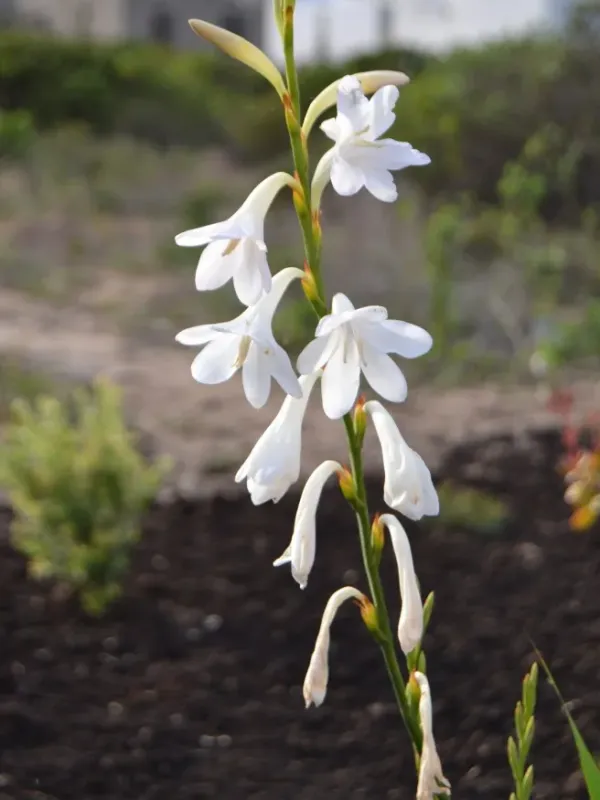
Description
Growing requirements
Watsonia versfeldii is a member of the Iridaceae family, originating from the winter-rainfall regions of South Africa. As a cormous perennial, it has evolved to thrive in environments with distinct seasonal cycles of moisture and dormancy.
The plant requires full sun exposure to maintain its structural integrity. Adequate light levels are essential for flower bud initiation, as insufficient illumination leads to weak stems that may collapse during the flowering phase.
Soil composition must be loose, well-draining, and gritty. In heavy clay soils, the corms are highly susceptible to rot, making the addition of sand or fine gravel essential to ensure optimal aeration and water drainage in the root zone.
Climatic requirements are specific: the species is not frost-hardy and performs best in Mediterranean-type climates. In colder regions, growers must lift the corms annually and store them in a dry, cool environment throughout the winter months.
Cultivation practices involve applying a balanced fertilizer during the early growth stages to support root development. Watering should be consistent during the spring growth phase but strictly reduced as the foliage begins to senesce in late summer.
Main diseases and pests
The primary threats to Watsonia versfeldii include various fungal pathogens such as Fusarium and Botrytis. These typically manifest as basal rot or crown rot, especially in poorly drained soil conditions where pathogens flourish.
Insect pests include thrips, which damage the epidermal layer of the leaves and flowers, and aphids that cluster on developing flower spikes. These pests not only reduce aesthetic quality but can also transmit viruses.
Spider mites can become problematic in hot and arid environments, leading to leaf discoloration and senescence. Mitigation involves maintaining adequate humidity and applying horticultural oils or acaricides when necessary.
Sanitation is a critical component of pest management. Removing and destroying infected plant debris helps prevent the spread of diseases. Furthermore, crop rotation is recommended to break the life cycles of soil-borne pathogens.
During the dormant storage period, inspection for physical damage or soft spots is necessary. Any corms showing signs of rot should be discarded immediately to protect the health of the remaining stock.