
Watsonia marlothii
Watsonia marlothii
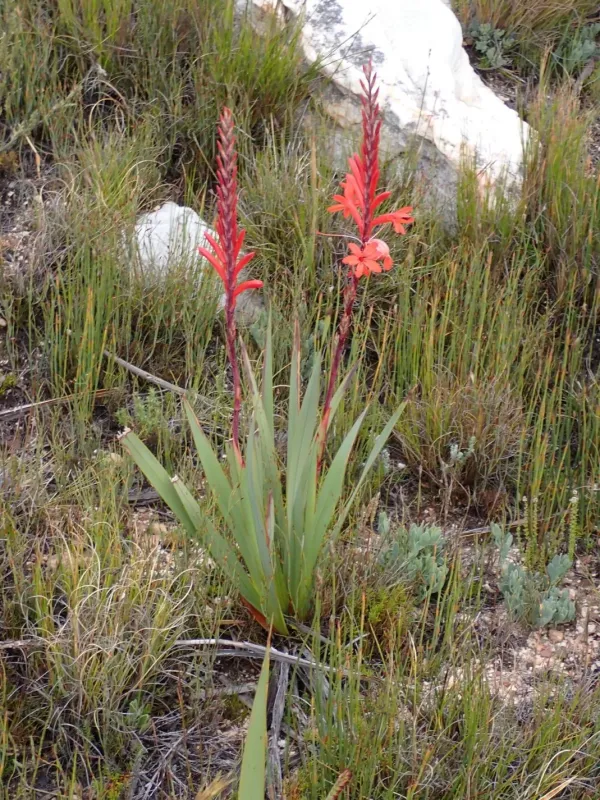
Description
Sowing dates
Watsonia marlothii is a perennial cormous plant belonging to the Iridaceae family. In its native habitat, it reproduces through seeds and by producing cormlets at the base of the parent plant.
Corms should be planted in spring once the danger of frost has passed and the soil has warmed. The ideal planting depth is 8 to 10 centimeters, ensuring the corm is securely established before the onset of high summer temperatures.
When propagating via seeds, sow them in a well-drained, sterile substrate in a greenhouse or indoor environment during winter. Seeds often require stratification to ensure uniform germination.
Proper spacing, typically 15–20 centimeters apart, is essential during planting. This arrangement provides adequate air circulation and sufficient nutrients for each individual plant to flourish.
The plant grows through an active vegetation phase where it develops a basal rosette of sword-shaped leaves followed by a robust floral spike, typical of this genus.
Growing requirements
Native to South Africa, Watsonia marlothii requires full sun exposure to thrive. Without sufficient sunlight, the plant will fail to produce high-quality blooms and may exhibit weak, leggy growth.
The plant demands a loose, well-drained soil structure. Sandy or gritty loams are preferred as they allow excess water to escape rapidly, preventing the corm from rotting.
While the plant needs regular watering during its active growth period, it is crucial to avoid waterlogged conditions. The substrate should be allowed to dry out slightly between waterings to maintain root health.
In cooler climates, this species is not frost-hardy. Gardeners must lift the corms in autumn and store them in a dry, cool area (around 5–8 degrees Celsius) throughout the winter months.
Fertilization with a balanced, low-nitrogen fertilizer during the early growth phase helps support the development of strong, healthy foliage and vibrant flowers.
Main diseases and pests
The most significant threat to Watsonia marlothii is corm rot, caused by fungal pathogens in damp or poorly drained soil. Pre-planting treatment with systemic fungicides can effectively mitigate this risk.
Spider mites are common pests that target the foliage during hot, dry weather. They pierce the leaf cells, resulting in a stippled, faded appearance and reduced vigor of the plant.
Aphids can infest young flower spikes and buds, potentially distorting the flowers and spreading viral infections. Insecticidal soaps or targeted systemic pesticides are often used to manage outbreaks.
Thrips may also cause damage to the petals, leaving silver streaks and deformed tissues. Monitoring is essential to catch infestations before they severely impact the ornamental value.
Winter storage conditions are critical; improper ventilation or residual moisture in storage containers can lead to mold and bacterial decay, destroying the corms before the next season.
Harvesting
Harvesting or lifting of corms takes place after the foliage has naturally yellowed and died back in late autumn. This process ensures that the corm has fully matured and stored enough energy.
Carefully lift the corms using a garden fork to avoid mechanical injury. After extraction, clean the soil away and remove dead roots to keep the storage material as clean as possible.
Drying is a mandatory stage. Corms should be placed in a shaded, well-ventilated location for several days to allow their outer skins to harden, which protects them from physical damage and rot.
Store the corms in breathable packaging, such as paper bags or open crates with dry peat or sand. This setup provides the necessary humidity control to prevent dehydration.
Maintaining a consistent environment during storage is the secret to high-quality planting material. Regularly check for damaged or softening corms to ensure the health of the entire collection.