
Warionia saharae
Warionia saharae
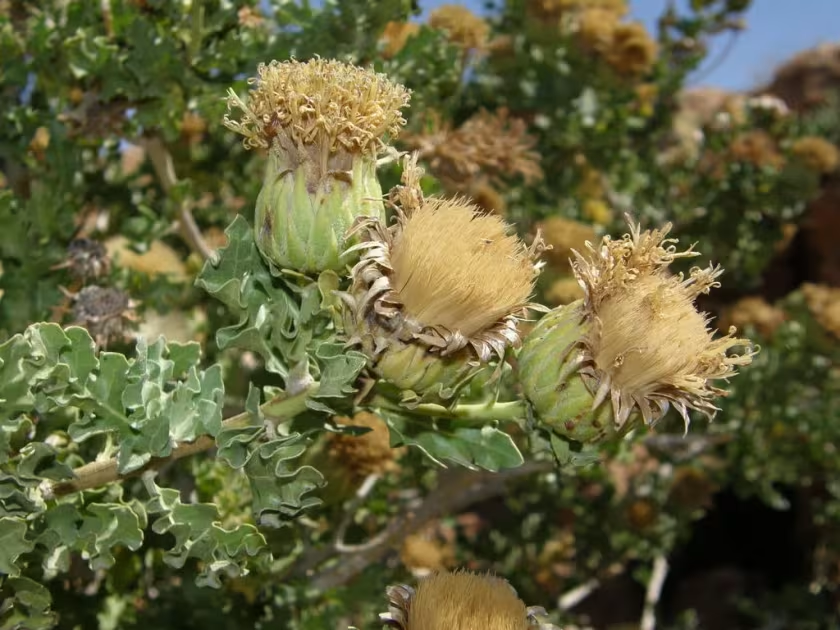
Description
Sowing dates
Warionia saharae is a perennial shrub belonging to the Asteraceae family, native to the arid environments of North Africa. It is a highly specialized xerophyte adapted to extreme desert conditions.
Propagation is typically achieved through seeds, which require specific moisture conditions to germinate. Nursery cultivation allows for the best control over the germination environment.
When sowing, seeds should be placed at a shallow depth in a well-draining, sandy substrate. Maintaining steady but minimal humidity is crucial during the initial seedling stage.
Transplanting into the field should occur once the plants are robust enough to withstand the desert heat. Proper spacing of approximately 80 cm is recommended to avoid competition for resources.
Timing the planting in early spring allows the plants to establish their root systems before the onset of the harshest summer heat, ensuring higher survival rates.
Growing requirements
This crop thrives in full sunlight and high temperatures. It is exceptionally resilient to drought, making it an excellent candidate for regions with scarce water resources.
Soil requirements include excellent drainage and a neutral to slightly alkaline pH. The plant cannot tolerate waterlogged soils, which lead to immediate root system decay.
Minimal fertilization is required, as the plant is adapted to nutrient-poor soils. Excessive nitrogen can be detrimental, leading to rapid, weak growth and reduced oil quality.
The plant demonstrates significant tolerance to thermal stress, enduring temperatures that would kill most agricultural crops. It utilizes its deep root system to access deep water tables.
Adequate air circulation around the plants is necessary to prevent the buildup of humidity, which can lead to fungal issues even in arid environments.
Yield
The primary economic output of Warionia saharae is its biomass, which is harvested for its essential oil and pharmacologically active compounds, particularly sesquiterpene lactones.
Yield capacity matures as the shrub ages, with maximum productivity typically observed between years three and six. Regular, selective pruning promotes new growth.
The dry leaf yield is the main commercial product. Efficient harvesting techniques are essential to preserve the integrity of the bioactive secondary metabolites.
Industry experts focus on optimizing the concentration of these active compounds through selective breeding and precise control of harvest timing based on the flowering cycle.
As a niche crop, Warionia saharae provides significant value for companies producing specialized natural extracts for the global pharmaceutical and fragrance sectors.
Main diseases and pests
Fungal root diseases are the primary threat to plantations, especially when excessive watering or poor soil drainage occurs. Management focuses on moisture control.
Pests such as certain coleopteran species may feed on the foliage, although the plant's high content of bitter compounds acts as a natural deterrent against many generalist insects.
Weed management is critical during the first two years of plantation development. Mechanical weeding is preferred over chemical herbicides to maintain the organic purity of the extract.
Powdery mildew may occur if plants are overcrowded and lack proper ventilation. Maintaining proper distance between shrubs significantly reduces this risk.
Proactive monitoring of the plantation is essential, as the rapid spread of infections in a desert environment can be difficult to manage once established.
Harvesting
Harvesting is best conducted during the peak flowering period, as this is when the concentration of essential oils in the leaves is at its maximum.
Manual or mechanized cutting of the aerial parts is performed, ensuring that the basal part of the plant remains intact to allow for subsequent regeneration.
Post-harvest drying must occur in shaded, well-ventilated conditions to prevent the degradation of heat-sensitive compounds by direct UV radiation.
Once dried, the raw material is processed using industrial methods like steam distillation or supercritical fluid extraction to recover the essential oils.
Proper storage of the final product involves airtight, cool conditions to maintain the therapeutic properties of the sesquiterpene lactones over longer periods.