
Volvox aureus
Volvox aureus
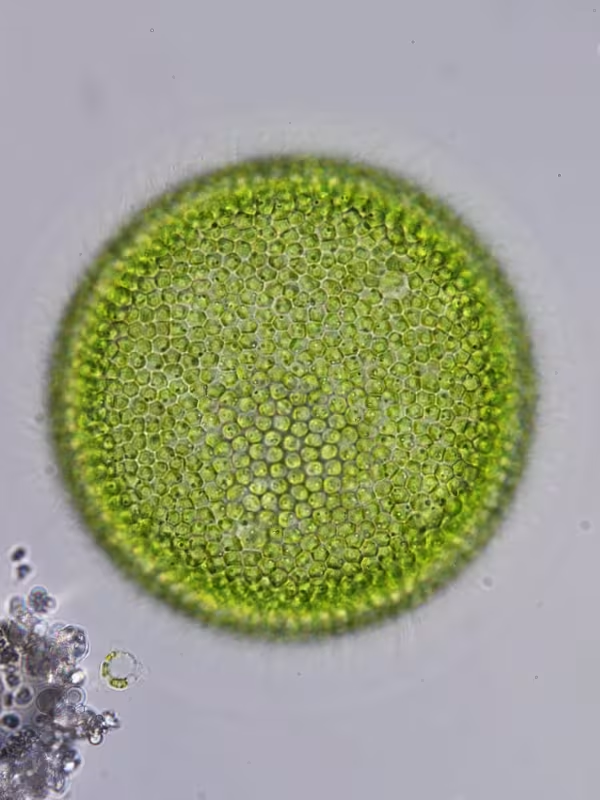
Description
Sowing dates
Volvox aureus is a species of colonial green algae belonging to the Volvocaceae family. In industrial or research settings, cultivation involves inoculating a sterilized nutrient medium with a pure stock culture within a controlled environment such as a photobioreactor.
The optimal time for inoculation is when environmental parameters, particularly temperature, remain stable between 18 and 24 degrees Celsius. Achieving the correct initial cell density is crucial for ensuring efficient vegetative reproduction of the colonies.
To accelerate colony growth, researchers often utilize synchronization methods, which allow for the precise control of cell division within each coenobium. Strict sanitary protocols during inoculation are mandatory to prevent contamination by unwanted microflora.
Population density must be monitored frequently through microscopic analysis, as excessively high concentrations can lead to rapid shifts in growth phases and colony decline. Routine renewal of the nutrient medium helps maintain the culture in its active growth phase.
In natural habitats, colonies proliferate when day length increases; therefore, artificial lighting systems must be designed to mimic optimal photoperiods to maximize colonial output in indoor facilities.
Growing requirements
Successful cultivation of Volvox aureus requires a growth medium with a pH range of 7.5 to 8.5. This specific alkaline range is essential for the cellular metabolic processes and the structural integrity of the colonial matrix.
The species has specific lighting requirements, favoring intense yet diffused light to drive photosynthesis without causing thermal stress. The spectral composition should match the absorption peaks of chlorophyll a and b.
Nutrient media must be balanced with essential nitrogen and phosphorus compounds, alongside trace elements that replicate a healthy freshwater environment. Constant aeration is necessary to ensure the uniform distribution of dissolved gases and nutrients.
The temperature range should be strictly maintained between 15 and 28 degrees Celsius. Exceeding these limits significantly damages the fragile colonies and can collapse the entire population within a very short timeframe.
Using high-purity water is essential, as the presence of heavy metals or excessive organic pollutants inhibits physiological processes and promotes the dominance of competing, less desirable algal species.
Yield
The yield of Volvox aureus is typically measured by dry biomass weight or the number of colonies per unit volume of media. Peak productivity is achievable only under automated control systems that keep parameters within narrow ranges.
Under optimal light and nutrient availability, the biomass of the culture can double within a few days, making it an efficient biological object for the extraction of specific bioactive compounds.
Total output depends heavily on the quality of the light flux and the precise timing of nutrient supplementation. Advanced bioreactors allow for stable yield profiles that meet industrial quality standards.
Standardized yield assessment includes centrifugation followed by spectrophotometric analysis of culture density. Post-harvest, the biomass must be carefully filtered and washed to ensure the purity of the final product.
Integrating Volvox cultivation with aquaculture systems provides an economically viable pathway, as the biomass serves as a high-quality nutritional supplement for fish larvae and other aquatic species.
Main diseases and pests
The primary biological threats to Volvox cultures include various parasitic fungi that can devastate an entire reactor population in a very short period. Infected colonies lose motility and disintegrate rapidly.
Competition from faster-growing, opportunistic green algae and unicellular microorganisms is a constant risk if equipment sterilization is not maintained. Such contaminants often outcompete Volvox for space and nutrients.
The accumulation of metabolic waste products in the medium can create toxic conditions, facilitating bacterial growth. Regular monitoring of the water chemistry and timely medium replacement are vital for preventing toxic inhibition.
Predatory protozoa, such as ciliates, represent a significant threat as they consume colonies, leading to rapid biomass loss. Protection is best achieved through fine mechanical filtration and ultraviolet sterilization of the input water.
Poor lighting design, which creates stagnant zones with temperature spikes, fosters the development of biofilms on bioreactor surfaces, indirectly lowering the overall health and vitality of the culture.