
Veronica gibbsii
Veronica gibbsii
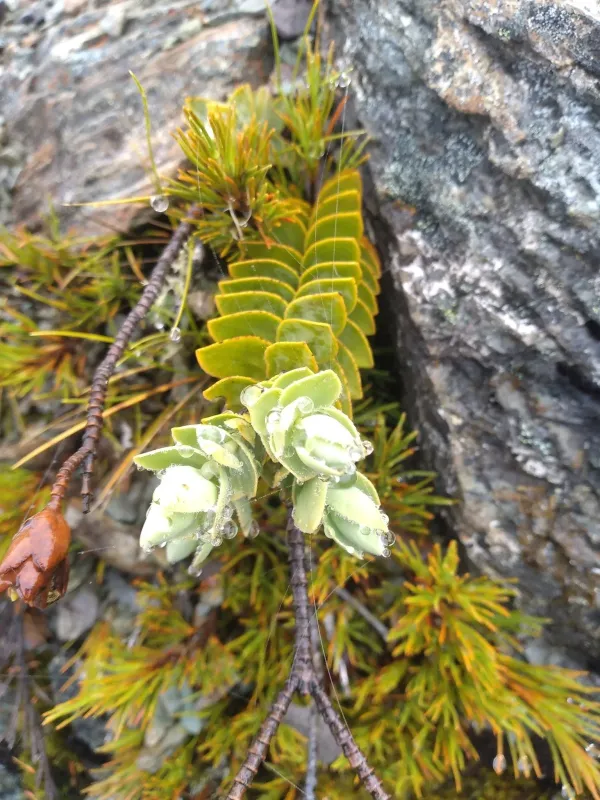
Description
Growing requirements
Veronica gibbsii belongs to the Plantaginaceae family and originates from the rugged, rocky habitats of the South Island of New Zealand. This small shrub is highly valued by horticulturists for its compact, neat appearance and evergreen foliage.
Botanically, it is a dwarf shrub characterized by its woody base and dense, overlapping leaves. The foliage has a grayish-green hue, often with bronze edges, providing year-round visual interest in the garden setting.
To cultivate Veronica gibbsii successfully, it is essential to provide excellent drainage. In a garden environment, it thrives in stony or sandy substrates that mimic its native subalpine scree slopes. It does not tolerate waterlogged soil.
The climate requirements include plenty of sunlight and a cool environment. It does not perform well in regions with extremely hot and humid summers, as heat stress can cause the plant to decline rapidly if not properly managed.
This species is widely used for rock gardens, trough plantings, and alpine troughs. Its slow growth habit and hardy nature make it an excellent choice for ornamental landscaping where space is limited and a natural aesthetic is preferred.
Main diseases and pests
The most significant threat to Veronica gibbsii is root rot, typically caused by excessive irrigation or poor soil drainage. If the soil remains saturated for extended periods, the root system begins to decay, leading to plant collapse.
Fungal diseases like powdery mildew may appear during periods of high humidity and poor ventilation. Providing enough distance between plants is a crucial step in maintaining the health and vigor of this alpine shrub.
Aphids can sometimes infest the succulent-like shoots during the growing season. While these pests are usually not fatal, they can cause leaf deformation and weaken the plant, making it more susceptible to other stressors.
Botrytis (gray mold) can be problematic in rainy, cool seasons. Preventive measures include keeping the foliage dry when watering and removing any dead or decaying plant material immediately to prevent the spread of spores.
Finally, soil-borne pests such as vine weevil larvae may occasionally damage the root system. Maintaining proper plant health through suitable fertilization and correct irrigation cycles is the best defense against various biological threats.