
Verbascum glabratum
Verbascum glabratum
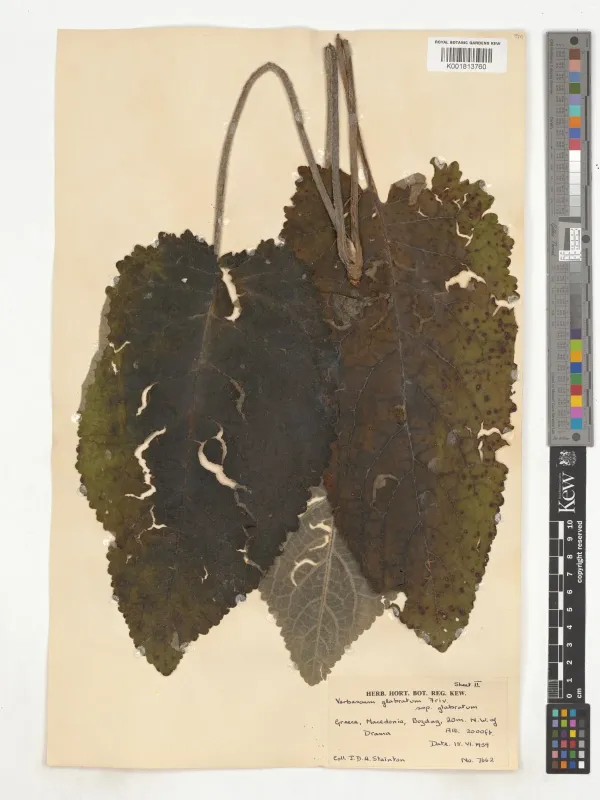
Description
Sowing dates
The sowing of Verbascum glabratum seeds is typically performed in early spring once the soil temperature consistently reaches 10–12 degrees Celsius. Alternatively, late autumn sowing can be used to ensure better seed stratification and earlier germination.
Given the minute size of the seeds, they should be sown on the surface or lightly pressed into the soil, covered with a layer no thicker than 0.5–1 centimeter to maintain contact with moisture while allowing light exposure.
For commercial production, a wide-row planting scheme with 45–60 centimeters between rows is recommended. This spacing is essential to accommodate the large basal leaf rosette formed during the first year.
Thinning is an essential practice once the second pair of true leaves appears. Proper plant density is crucial to prevent competition for light and nutrients, which directly impacts the vigor of the second-year flowering stalks.
To improve establishment, growers should prioritize the use of high-viability seeds. If soil conditions are dry during sowing, light irrigation is necessary to facilitate germination and ensure uniform plant density.
Growing requirements
Verbascum glabratum, a member of the Scrophulariaceae family, is a heliophilous plant that thrives in full sun exposure. Shady conditions significantly reduce the quality and quantity of flower production.
The plant is not highly demanding regarding soil fertility; it grows exceptionally well in dry, stony, or sandy soils. However, good soil drainage is a critical requirement to prevent root zone saturation.
It is remarkably drought-tolerant, capable of surviving in arid environments. This adaptation makes it a suitable candidate for cultivation in regions with limited irrigation potential, provided the soil is well-aerated.
Optimal growth is achieved in soils with neutral to slightly alkaline pH levels. While it tolerates various soil types, avoiding heavy clay soils that retain excess moisture is necessary to ensure the longevity of the plant stand.
Routine maintenance includes keeping the soil surface loose and free from weeds, especially in the first growing season. This promotes better air circulation and nutrient uptake, which are vital for plant health.
Yield
The primary economic output of Verbascum glabratum is the medicinal flower material, consisting of petals and attached stamens. Harvest efficiency is highly dependent on the plant density and the developmental phase of the stand.
Maximum yields are typically achieved in the second year of the plant's life cycle. Growers should aim to maximize the number of healthy, flowering stems per hectare to optimize the economic return from the plantation.
The yield of dry material is a fraction of the fresh weight, usually around 20–25%. This necessitates an efficient logistics chain from the field to the drying facility to ensure that product quality is not compromised.
Because flowers do not open simultaneously, the harvest process involves multiple passes over the field throughout the flowering season. This ensures that only high-quality, fully open flowers are collected.
Strategic nitrogen management in the early stages can boost leaf biomass, which in turn supports a more robust flowering response in the subsequent reproductive phase of the crop.
Main diseases and pests
Verbascum glabratum is generally resistant to many common agricultural pests. However, in humid or poorly ventilated conditions, it may be susceptible to powdery mildew and other fungal diseases affecting the foliage.
Root rot is the most common threat when the soil remains waterlogged for extended periods. Selecting well-drained slopes or sandy patches for cultivation is the most effective way to prevent these issues.
Weed control is critical during the initial growth phase. Once the plant forms a large basal rosette, it becomes highly competitive and suppresses surrounding weeds, effectively reducing the need for intensive weeding later on.
Monitoring for insect pests such as weevils that target flower buds is necessary during the flowering period. Integrated pest management (IPM) strategies, including biological controls, are preferred to chemical treatments.
Maintaining a clean field environment and practicing crop rotation helps prevent the buildup of soil-borne pathogens that might otherwise impact the vigor of the Verbascum stands over time.
Harvesting
Harvesting should be conducted during the mass flowering phase, targeting fully expanded petals. Timing is strictly dictated by the weather; harvesting is only feasible in dry conditions without dew.
The petals must be removed carefully with stamens attached, ensuring that the green calyx remains on the plant to avoid contaminants in the final product. Manual harvesting is currently the standard method for this crop.
Immediate post-harvest processing is vital. The collected flowers must be transported to the drying area quickly to prevent fermentation, which can rapidly cause the material to darken and lose its value.
Drying should take place in a shaded, well-ventilated area or in mechanical dryers at temperatures not exceeding 45 degrees Celsius to preserve the essential phytochemicals found in the flower material.
Properly cured and dried product should retain a vibrant yellow color and a distinct, mild aroma. Storing the final product in moisture-proof and light-shielded containers is necessary to maintain shelf life.