
Enoki mushroom
Flammulina velutipes (Er.) Sing.
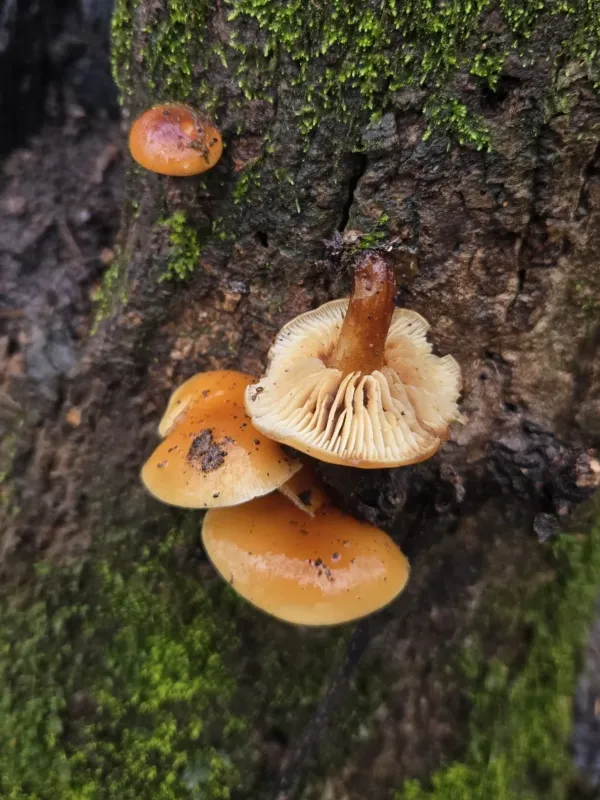
Description
Sowing dates
Flammulina velutipes, widely known as the Enoki mushroom, is a cold-loving saprotrophic fungus belonging to the Physalacriaceae family. Cultivation is primarily conducted in controlled environment chambers.
The growing process begins with the preparation of sterilized or pasteurized substrate blocks made from hardwood sawdust, rice bran, or agricultural by-products.
Inoculation of the substrate with pure culture mycelium is performed in sterile conditions to ensure the absence of competing organisms.
Incubation requires a dark, temperature-controlled environment ranging from 20 to 24 degrees Celsius, where the mycelium fully colonizes the substrate over 20–30 days.
Successful cultivation relies on the genetic quality of the spawn and the rigorous maintenance of hygiene protocols during the block preparation phase.
Growing requirements
Transitioning from the vegetative phase to fruiting requires a significant temperature drop to 5–10 degrees Celsius and increased atmospheric humidity.
Controlled air circulation is essential, as the accumulation of carbon dioxide is utilized specifically to encourage the elongation of the stipe (stem) characteristic of commercial Enoki.
Light levels should be kept low to moderate during the harvest phase to prevent excessive cap development and ensure the preferred pale, long-stemmed appearance.
Substrate moisture must be strictly maintained; however, direct water contact with the mushrooms should be avoided to prevent bacterial rot and surface discoloration.
The facility must be equipped with efficient HVAC systems to manage the heat generated by the growing mycelium and maintain constant environmental parameters.
Yield
Commercial yields for Enoki mushrooms typically range from 20 to 30 percent biological efficiency based on the dry weight of the substrate material.
The use of specific plastic collar inserts is a common agricultural practice that promotes the vertical growth of fruiting bodies, significantly improving harvest efficiency.
A single substrate block can produce multiple flushes of mushrooms, though the first flush usually accounts for the vast majority of the total yield.
Consistency in substrate density and nutrient fortification significantly impacts the total weight and the uniformity of the final produce.
Growers often track the yield per block to adjust nutrient inputs for future batches, ensuring long-term profitability and consistency.
Main diseases and pests
The most common disease risks include Trichoderma (green mold) and various bacterial pathogens that thrive in high-humidity cultivation environments.
Fungus gnats are the primary pest concern, as their larvae can severely damage the mycelial network and degrade the quality of the fruiting bodies.
Poor ventilation often leads to the development of web-like molds that can quickly spread across the surface of the growing blocks, causing significant losses.
Viruses and bacterial infections can cause stunting and malformation of the mushrooms, often indicating a breakdown in sanitation procedures.
- Regular air filtration checks.
- Sanitation of equipment.
- Integrated pest management.
Harvesting
Harvesting is performed by carefully cutting the cluster of mushrooms at the base of the substrate, ensuring that no debris is left on the growing surface.
Timing is critical: the harvest must be completed before the mushroom caps open to prevent spore release and maintain the desired market quality.
After harvesting, the product must be immediately pre-cooled to extend shelf life and prevent tissue breakdown during transportation.
Enoki mushrooms are usually vacuum-packed or placed in plastic bags to preserve moisture and prevent oxidation during retail storage.
The post-harvest shelf life is relatively short, typically requiring cold chain logistics to deliver the fresh produce to the consumer within a few days.