
Vandopsis shanica
Vandopsis shanica
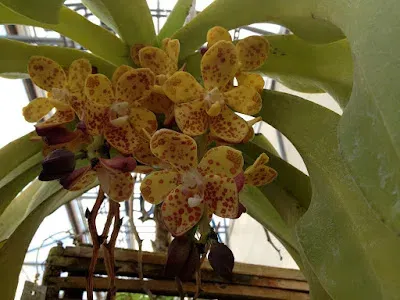
Description
Growing requirements
Vandopsis shanica is a rare and distinct species belonging to the Orchidaceae family. Naturally occurring as an epiphyte, this plant thrives in the tropical conditions of Southeast Asia, where it grows attached to forest trees.
To cultivate this plant successfully, one must replicate its natural environment. High humidity levels, ideally ranging between 70% and 80%, are essential for maintaining turgor in its thick, leathery leaves.
The planting medium must be highly porous. A mixture of coarse bark, charcoal, and sphagnum moss is recommended to facilitate rapid drainage and ensure the roots receive adequate oxygenation, preventing root rot.
Lighting should be bright but filtered to protect the plant from leaf scorch. An east-facing or west-facing position is typically ideal for providing the necessary light intensity without exposing the plant to harsh midday heat.
Temperature management requires a warm, stable climate. Temperatures during the day should remain within the 22–26°C range, while a slight cooling trend at night helps to promote healthy vegetative growth and future flowering.
Main diseases and pests
Fungal infections are the most common issue, often resulting from excessive dampness and poor airflow. Rotting of the base or the crown can lead to rapid decline if not identified early.
Pests such as mealybugs often hide in the tight leaf axils, making them difficult to detect. Regular inspection and cleaning of the foliage are necessary to keep the plant free from these sucking insects.
Spider mites can become a nuisance if the surrounding air is too dry, particularly during winter months. Their presence is marked by fine webbing and stippling on the leaves.
Prevention is the best strategy for managing pests. Maintaining good sanitation and using an appropriate systemic insecticide or acaricide when necessary can protect the plant from severe infestations.
Proper air circulation is crucial to reducing the risk of pests and diseases. Fans or natural ventilation help to ensure that moisture on the leaves evaporates quickly, preventing the onset of mold.