
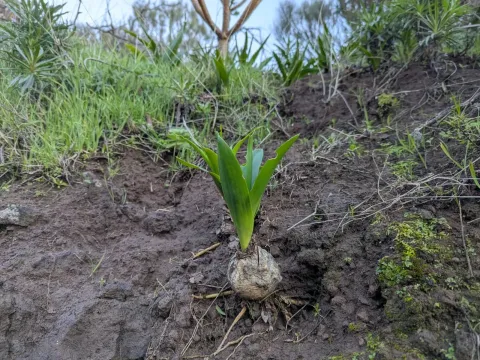
Urginea
Urginea
Urginea, often synonymous with Drimia, is a genus of perennial bulbous plants belonging to the Asparagaceae family. These plants are scientifically recognized for their ability to thrive in harsh, arid environments through specialized storage organs.
What the section contains

Urginea
Originating from the Mediterranean basin, Africa, and parts of India, the plant has evolved to manage seasonal water scarcity. Its natural habitat includes rocky slopes and sandy soils where drainage is excellent and nutrient competition is relatively low.
To cultivate Urginea successfully, one must replicate its native conditions, specifically focusing on soil drainage. Sandy or stony substrates are preferred to prevent water stagnation, as the bulbs are highly susceptible to rot if submerged in damp conditions for extended periods.
Climate requirements involve significant solar exposure and heat. The plant is adapted to warm temperatures and often experiences a dormant phase during the driest or hottest periods of the year, during which all surface growth ceases.
Agronomic management requires careful monitoring of the moisture balance. Fertilization should be kept to a minimum, as these plants have adapted to thrive in nutrient-poor environments where excessive minerals can inhibit the development of the bulb.
The primary threats to Urginea are fungal pathogens, specifically those that cause basal rot when the soil is overly saturated. Monitoring the moisture levels is the most effective preventative measure against these diseases.
Pests such as bulb mites are a persistent threat, especially in controlled environments. These pests can cause severe damage to the internal structure of the bulb, often rendering it non-viable for future propagation or medicinal processing.
The main commercial and agricultural use of Urginea is pharmaceutical. The bulbs are processed to extract cardiac glycosides, which are used in the medical field to manufacture medications for heart conditions.
Due to the inherent toxicity of the plant, it has historically served as a base for natural rodenticides. This property necessitates strict handling protocols and clear separation from forage crops to avoid accidental ingestion by livestock.
Professional handling of the crop requires wearing protective gear, as the plant juices can cause severe irritation. Agronomists must ensure that fields are marked and isolated, especially when cultivation is performed near urban or grazing areas.