
Sea squill
Urginea maritima (L.) Baker
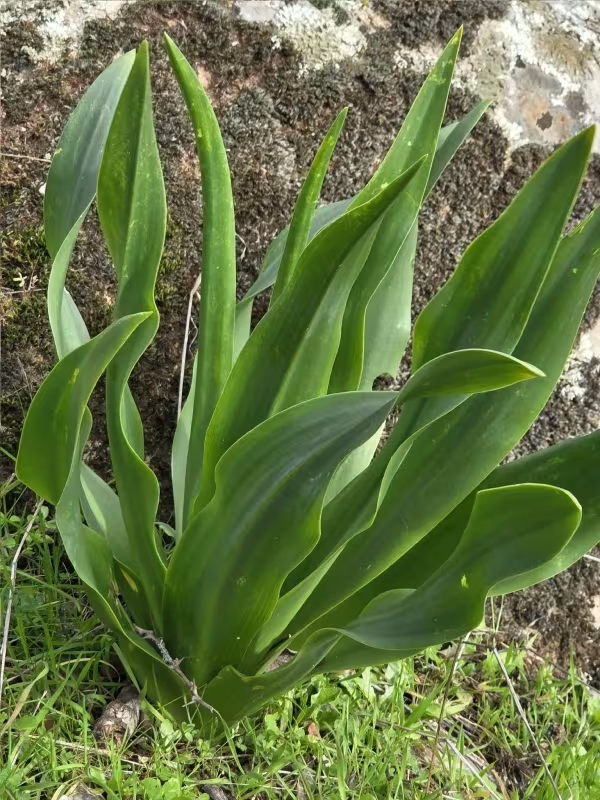
Description
Sowing dates
Sea squill is typically propagated vegetatively by dividing offsets from mature bulbs during the dormant season to ensure plant uniformity.
Planting is best performed in the autumn when the plant is not in its active growth phase, allowing the roots to establish before the spring heat.
When selecting a site, ensure the bulbs are spaced adequately, as mature specimens can become quite large and require significant room for healthy development.
The planting depth should be adjusted so that the top of the bulb remains partially exposed, which is critical for preventing rot in this species.
Newly planted bulbs should be kept free of weeds to minimize competition for nutrients during the initial growth stages of the season.
Growing requirements
Sea squill requires full sun exposure and warm climatic conditions, mirroring its natural Mediterranean habitat for optimal growth.
Excellent soil drainage is the most vital requirement, as this plant is highly sensitive to waterlogged conditions that cause rapid decay of the bulb.
The species thrives in light, sandy, or rocky soils, which mimic the well-drained slopes of its native range and support strong root system expansion.
It displays remarkable drought tolerance, storing water within its fleshy bulb scales to endure the dry, hot summers of its native environment.
Neutral to slightly alkaline soil pH is preferred, as this ensures the bioavailability of essential minerals needed for the plant's metabolic processes.
Yield
The yield of sea squill is determined by the biomass of the bulbs collected after the plants have reached a specific maturity age.
Consistency in crop management, including soil nutrition and weed control, directly influences the concentration of cardiac glycosides in the harvested material.
Plants are usually cultivated over several years to allow the bulbs to reach their full potential in terms of active ingredient content.
The drying process reduces the weight significantly, and farmers must factor in this moisture loss when estimating the marketable weight of the final product.
Yield efficiency is maximized through controlled harvesting cycles that allow the population to regenerate effectively after each cycle.
Main diseases and pests
Fungal diseases are the primary threat, especially when plants are grown in heavy or poorly drained soils that encourage rot.
Root rot remains the most devastating issue, often caused by pathogenic fungi attacking the basal plate of the bulb under damp conditions.
Pests like bulb flies can pose a significant risk, requiring integrated pest management strategies to protect the integrity of the crop.
Nematode infestations can also damage the internal tissues of the bulbs, significantly reducing the quality and volume of the medicinal harvest.
Regular monitoring and the removal of infected bulbs are essential practices for maintaining a healthy and productive plantation.
Harvesting
Harvesting is traditionally carried out after the foliage has died back, indicating that the bulb has finished its active growth cycle.
Bulbs are carefully extracted from the ground, ensuring they remain intact, as any physical damage increases susceptibility to pathogens.
Once harvested, the bulbs are cleaned of debris, trimmed of roots, and cut into thin, uniform slices to facilitate even drying.
Drying must be conducted in a well-ventilated space or thermal dryer at moderate temperatures to preserve the heat-sensitive compounds.
Once the material is fully dried and brittle, it should be stored in moisture-proof containers to prevent degradation during transport and storage.