
Urena lobata
Urena lobata L.
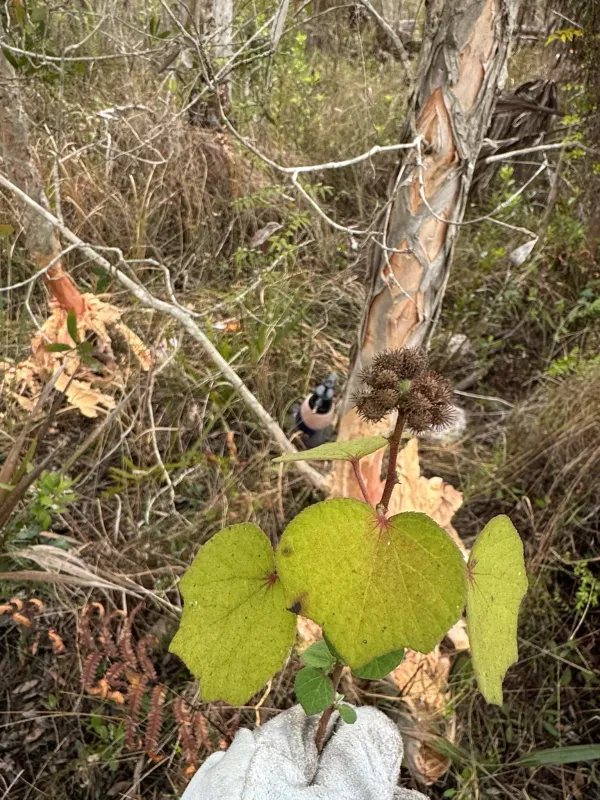
Description
Sowing dates
Sowing Urena lobata is typically performed when the soil has sufficiently warmed, with temperatures remaining consistently above 18°C. As a tropical plant, it is highly sensitive to cold soil, which can significantly inhibit germination and early plant vigor.
Row planting with spacing between 15 to 30 centimeters is the recommended practice. Seeds should be sown at a depth of 2 to 3 centimeters, ensuring adequate soil-to-seed contact for uniform emergence across the field.
The seeding rate depends on the desired end use of the fiber. Denser populations encourage thinner, taller stems, which are highly desirable for the production of fine, high-quality bast fiber used in textile manufacturing.
The total vegetative cycle ranges from 120 to 150 days. Producers must strategically plan the sowing period to ensure that the rapid growth phase coincides with the seasonal peak in precipitation to maximize biomass production.
Proper seedbed preparation is essential, involving deep plowing and surface leveling. Since the plant is vulnerable to weed competition in its early stages, ensuring a clean field at the time of sowing is crucial for success.
Growing requirements
Urena lobata is a member of the Malvaceae family and requires full sun exposure to flourish. It does not tolerate shade well, and excessive overcrowding can lead to poor stem development and lower fiber yield.
Fertile, well-drained loamy soils are ideal for this crop. The plant is particularly susceptible to waterlogging, so effective drainage systems must be in place to prevent root decay and poor overall plant health.
Optimal growth occurs at temperatures between 22°C and 30°C. Development slows significantly if temperatures drop below 10°C, making site selection based on thermal records a key step in regional crop planning.
Water availability is the primary driver of fiber accumulation. Consistent moisture throughout the stem elongation phase is necessary for producing high-quality fiber, necessitating irrigation in areas with erratic rainfall.
Balanced nutrient application, focusing on nitrogen and phosphorus, significantly enhances stem strength and fiber yield. Soil analysis should be conducted regularly to provide appropriate fertilization levels throughout the season.
Yield
Yield potential of Urena lobata is highly dependent on agricultural management practices. Under favorable conditions, farmers can expect a yield of dry stalks ranging from 5 to 8 metric tons per hectare.
The fiber extraction rate from dried stalks is typically around 15–20%. This bast fiber is prized for its strength, contributing to the global demand for bio-based, sustainable industrial materials for rope and textile production.
Seed yield is an important secondary metric, particularly for farmers producing their own planting stock. With proper management, the plant produces an abundant supply of seeds, provided that weather remains favorable during the maturation phase.
Crop rotation with legumes can boost productivity by improving soil fertility and nitrogen content. Integrating such practices helps maintain soil structure and reduces the reliance on heavy synthetic fertilization.
Technological improvements in harvesting equipment have reduced post-harvest losses, helping to capture more of the biological yield potential. Modern machinery ensures cleaner stalks, which directly translates to higher processing efficiency.
Main diseases and pests
Fungal diseases represent the most significant threat to Urena lobata, particularly in humid or poorly ventilated environments. Powdery mildew can cause serious leaf damage, impacting the overall photosynthetic capacity of the plant.
Root rot is a major risk on poorly drained sites, often leading to sudden wilting and lodging. These issues not only reduce yield but can also make mechanical harvesting difficult due to the collapsed state of the stems.
Pests such as aphids and spider mites are common. These organisms suck sap from tender shoots, causing significant stress and deformation. Regular scouting is required to identify and manage infestations before they reach economic damage thresholds.
Caterpillars can cause extensive damage to foliage. Integrated Pest Management (IPM) strategies, including biological controls and targeted applications, are the most effective way to protect the crop while minimizing environmental impact.
Maintaining a strict crop rotation schedule helps reduce the buildup of soil-borne pathogens. Avoid planting Urena on the same plot for at least three consecutive years to disrupt the disease cycle.
Harvesting
The harvest should ideally take place at the onset of the flowering phase. This is when the fiber quality is at its peak, providing the ideal balance between stem length, durability, and processing ease.
Specialized harvesting equipment is used to cut the stalks efficiently. Rapid processing after cutting is vital to prevent the stalks from drying out or degrading, which could compromise the final quality of the extracted fiber.
The retting process is a critical stage where the fiber is separated from the wooden core. Whether using water retting or mechanical methods, careful temperature and time management ensure that the cellulose remains strong and intact.
After extraction, the fibers are cleaned and dried under shaded conditions to preserve their natural color and strength. High-quality fiber should be soft, light-colored, and free from any traces of fermentation or mold.
For seed production, the crop is left until the capsules fully mature. Once harvested, the seeds must be thoroughly dried to a moisture content of around 12% to ensure safe storage and long-term viability for future plantings.