
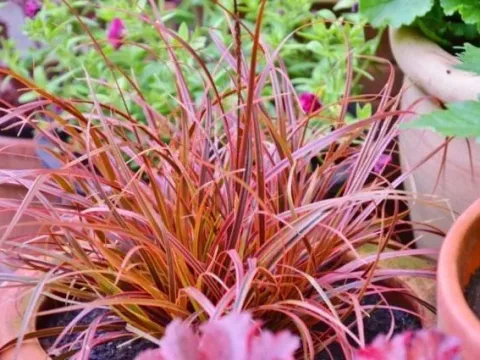
Uncinia
Uncinia
Uncinia is a genus of perennial plants belonging to the Cyperaceae family, commonly known as hook sedges. These plants are native primarily to the Southern Hemisphere, with the highest diversity found in New Zealand, Australia, and parts of South America.
What the section contains

Uncinia
Botanically, they are characterized by their tufted growth habit and narrow, often leathery leaves that come in striking shades of bronze, copper, and deep red. The name refers to the hooked awns on the utricles which facilitate seed dispersal by attaching to animals.
These plants thrive in fertile, well-draining soils rich in organic matter. They prefer environments that mimic their natural habitat, which is usually damp forest floors or sheltered grasslands with high ambient humidity.
Regarding climate, Uncinia is best suited for temperate climates. It requires consistent moisture throughout the growing season but demands excellent drainage, as waterlogged soil can lead to rapid root decay and plant decline.
In landscaping, Uncinia is used as a low-maintenance, colorful foliage plant. It is highly valued for its ability to maintain its unique coloration throughout the year, making it an excellent choice for rock gardens, borders, and mixed containers.
The main threats to Uncinia include fungal infections, particularly those triggered by poor drainage or overly humid conditions with low airflow. Root rot and fungal leaf spot are common issues that require strict water management.
Pests such as aphids and spider mites can occasionally affect the foliage, especially when the plant is under stress from drought or high temperatures. Regular monitoring is essential to catch infestations before they cause significant damage.
Good garden hygiene, such as removing dead leaves and debris from the base of the plant, significantly reduces the habitat for potential pests and pathogens. This also encourages healthier growth and improves the plant's aesthetic appearance.
Avoid overhead watering during the evening to prevent prolonged leaf wetness, which encourages fungal spore germination. Drip irrigation or careful watering at the base of the plant is recommended for optimal health.
When grown in colder regions, protection against frost is necessary to maintain the plant's vigor. Mulching the root zone helps regulate temperature and moisture, preventing the stress that often precedes pest and disease outbreaks.