
Typhonodorum lindleyanum
Typhonodorum lindleyanum
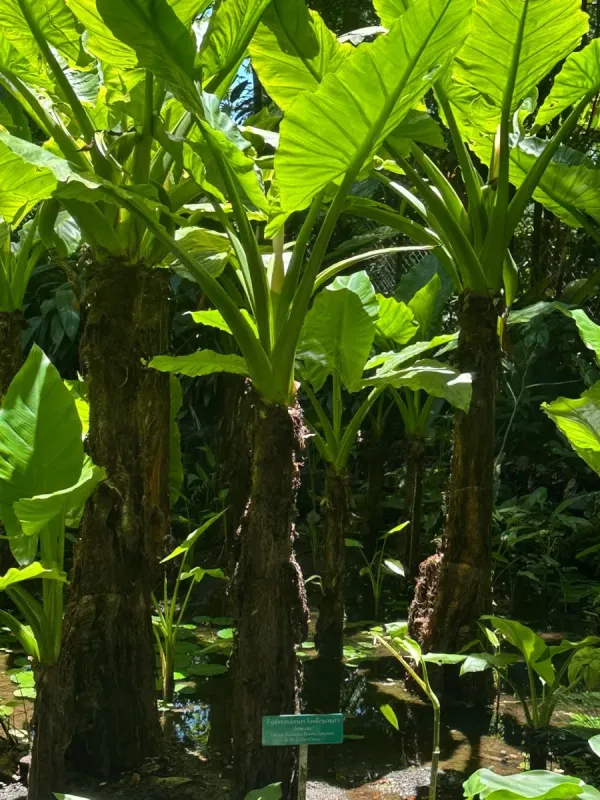
Description
Growing requirements
Typhonodorum lindleyanum, a member of the Araceae family, is a massive perennial herb endemic to Madagascar and Zanzibar. It thrives in tropical wetlands, marshes, and riverbanks where moisture is abundant and temperatures remain consistently high throughout the year.
The plant demands a specific climate characterized by the absence of frost and limited seasonal variation. Development slows significantly if temperatures drop below the optimal tropical range, making site selection crucial for commercial success in agricultural systems.
Soil requirements for this species are centered on high organic matter content and water retention. It prefers muddy or peaty substrates that mimic the natural saturated conditions of its native habitat, allowing the root system to remain submerged without suffering from root rot.
Botanically, the plant is characterized by large, sagittate leaves and robust, starch-rich rhizomes. It can reach impressive heights of several meters, creating a dense canopy that effectively suppresses competing weed species in the field.
Agronomic management involves maintaining constant moisture levels, which may involve controlled flooding techniques. Because the plant is quite large, proper spacing is essential to ensure adequate airflow and sunlight penetration for individual plants within the plantation.
Harvesting
The primary agricultural utility of Typhonodorum lindleyanum lies in its edible rhizomes. In local communities, these serve as a staple carbohydrate source, harvested and processed specifically for their starch content to support food security.
Harvesting is a manual process due to the large size of the plants and the saturated nature of the soil. Workers must dig deep to extract the rhizomes, ensuring they are not severed, as damaged tissue is prone to rapid microbial decay in humid tropical environments.
Safety during processing is paramount. The raw tissues contain calcium oxalate crystals, which are irritants. Thorough boiling, soaking, or fermentation is mandatory to break down these compounds before the rhizomes are safe for human consumption.
Young leaves are also harvested in some regions to be used as a cooked vegetable, provided they are processed with the same diligence as the rhizomes. This dual-use approach maximizes the utility of the crop per unit area of land cultivated.
Post-harvest management often involves drying or milling the processed rhizomes into flour to increase shelf life. This makes the crop a viable commodity that can be stored and traded during periods when fresh harvests are unavailable.