
Tylophora indica
Tylophora indica
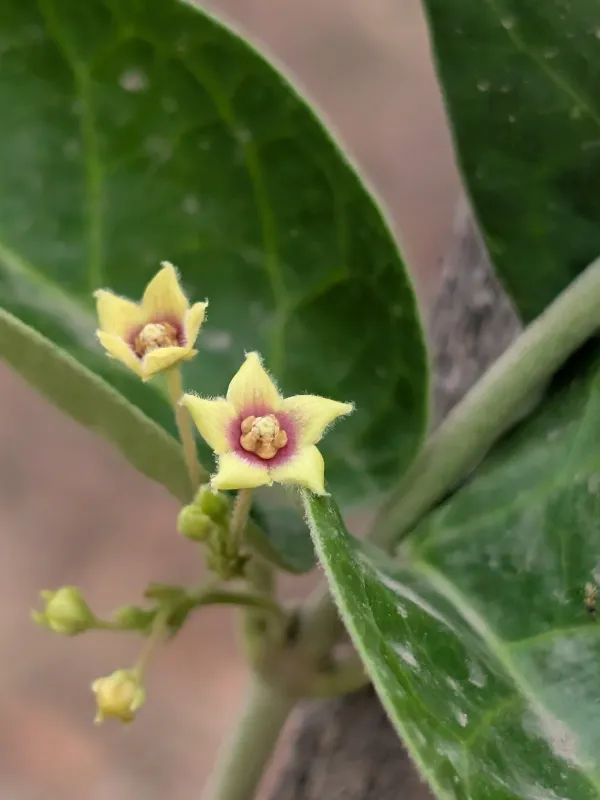
Description
Sowing dates
Tylophora indica is a perennial climbing plant belonging to the Apocynaceae family. In agricultural settings, it is primarily propagated through seeds, although vegetative propagation via stem cuttings is also widely utilized for more rapid establishment.
For seed sowing, it is essential to use fresh seeds, as their viability decreases significantly within a few weeks of harvest. Seeds are sown in a light, moist, and well-draining potting medium in nursery beds during the spring season.
Cuttings should be taken from healthy, semi-hardwood stems. Treating the base of the cuttings with rooting hormones enhances the rate of success and ensures the development of a more robust root system before transplanting.
When sowing in the field, rows should be spaced appropriately to account for the vine's climbing nature. A distance of at least 70 cm between plants is recommended to facilitate canopy development and maintenance.
Seedlings should be protected from harsh environmental conditions during the initial stage. Once they develop at least 4–6 true leaves, they are ready for hardening off and subsequent transplanting to the main field.
Growing requirements
Tylophora indica thrives in tropical and subtropical climates where humidity is high and temperatures are consistently warm. It is highly intolerant to frost and requires frost-free conditions for survival.
The crop requires fertile, deep, and well-drained soil. Sandy loam soils enriched with organic matter or compost provide the best environment for the development of both the foliage and the root system.
Consistent moisture is vital for the crop, but it is equally sensitive to waterlogging. A drip irrigation system is often ideal, as it allows for precise control of water delivery without soaking the leaves.
As a vigorous climber, providing vertical support is a mandatory agronomic requirement. Trellises, wire meshes, or poles allow the vine to spread, ensuring better sunlight exposure and air circulation, which reduces disease pressure.
The plant performs best under partial shade. While it requires light for photosynthesis, excessive exposure to direct, intense midday sun can lead to leaf yellowing and reduced accumulation of secondary metabolites.
Main diseases and pests
The most common pests affecting Tylophora indica are aphids, mealybugs, and spider mites. These pests thrive in dry conditions and can cause significant damage by sucking sap from tender leaves and shoots.
Root-rot and stem-rot diseases, often caused by soil-borne pathogens like Rhizoctonia or Phytophthora, are major threats. These usually occur due to poor drainage and over-saturation of the root zone.
Regular sanitation, such as removing fallen leaves and pruning congested branches, is the primary line of defense. Ensuring good airflow within the canopy significantly lowers the risk of fungal infections.
If chemical intervention is required, it is essential to choose products compatible with medicinal crop standards. Often, neem-based sprays are sufficient to manage small infestations without leaving toxic residues on the plant.
Monitoring for deficiency symptoms is also part of plant protection. Yellowing leaves may indicate micronutrient deficiencies or soil pH imbalances, which must be corrected promptly to maintain plant health.
Harvesting
Harvesting strategies vary depending on the target medicinal part. Leaves can be harvested periodically throughout the growing season, starting from the second year, ensuring that enough foliage remains to support growth.
Roots, which are highly valued for their alkaloid content, are typically harvested when the plant reaches maturity, usually after 2 to 3 years. This timing ensures the highest concentration of bioactive compounds.
Roots should be carefully excavated to avoid breakage. After extraction, they must be thoroughly washed to remove soil particles and cut into smaller sections for easier drying.
The harvested material must be dried in a shaded, well-ventilated area to prevent fermentation and loss of active ingredients. Exposure to direct sunlight is strictly avoided as it degrades key medicinal components.
Dried leaves and roots are stored in airtight, moisture-proof containers in a cool, dark environment. Proper storage conditions are critical for maintaining the shelf life and potency of the final medicinal product.