
Broad-leaved turgenia
Turgenia latifolia
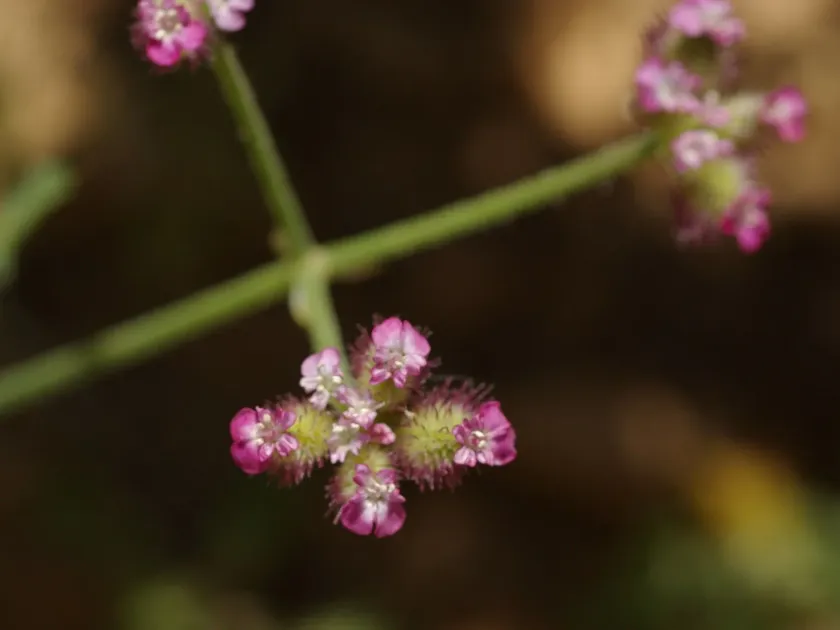
Description
Sowing dates
Broad-leaved turgenia, or Turgenia latifolia, is an annual plant that reproduces through seeds. It typically completes its life cycle in one season, often germinating during the autumn or spring months.
The seeds have a robust structure that allows them to persist in the soil seed bank for several years. Germination is triggered by adequate soil moisture and favorable temperatures.
Emergence often coincides with the initial stages of cereal crop development, making the weed a significant competitor for resources like light and water.
Effective management requires pre-sowing cultivation to destroy germinated seedlings before they establish a strong root system in the topsoil.
Post-emergence control should be implemented early, before the plants initiate their flowering phase and produce seeds to re-infest the field.
Growing requirements
Belonging to the Apiaceae family, this species thrives in regions with warm, moderate climates, including parts of Europe, the Caucasus, and Western Asia.
The plant prefers well-drained, nutrient-rich soils with a high carbonate content. It is commonly found in areas with neutral to alkaline soil pH levels.
It demands significant sunlight exposure and performs poorly in shaded environments or within highly compacted soil profiles that lack aeration.
Agrotechnical requirements include maintaining crop rotation, which helps break the lifecycle of this weed and reduces its overall population density.
As it is a competitive plant, early season crop canopy closure is an essential strategy for suppressing its growth in cereal fields.
Main diseases and pests
The primary agricultural threat posed by Broad-leaved turgenia is its role as a competitive weed that reduces yield in small grain production.
It can act as an alternative host for various pests and diseases that affect other crops in the Apiaceae family, such as root-damaging insects and fungi.
Common fungal diseases found on this plant include powdery mildew, which can spread to neighboring crops if the density of weeds is high.
Insect pests, including aphids and leaf-miners, frequently use the plant as a breeding ground, potentially increasing the pest pressure on adjacent cultivated fields.
Effective control is achieved through a combination of mechanical weeding, chemical herbicide application, and the use of clean, certified planting seed.