
Triuris hyalina
Triuris hyalina
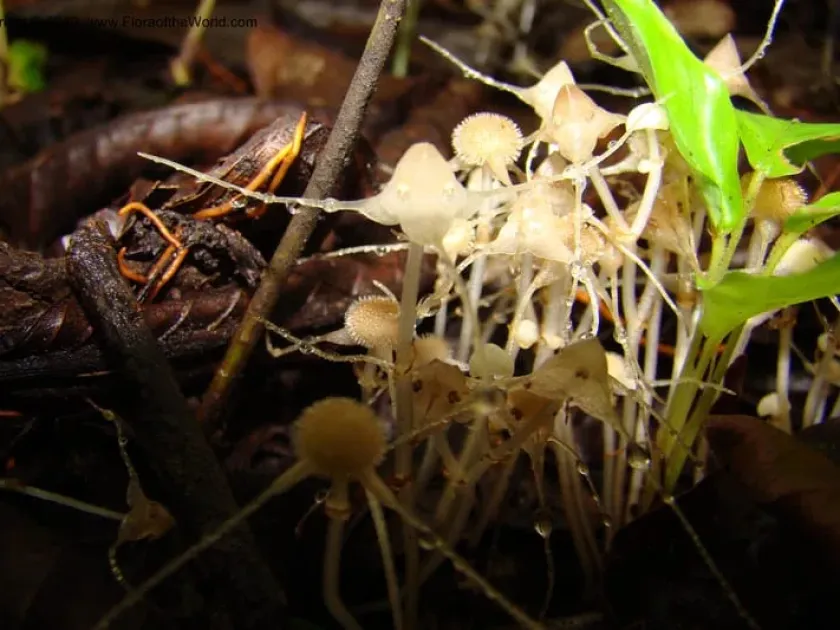
Description
Growing requirements
Triuris hyalina is a specialized mycoheterotrophic plant species belonging to the Triuridaceae family. Unlike conventional agricultural crops, this plant lacks chlorophyll and relies entirely on fungal networks to obtain nutrients, living in a strictly symbiotic relationship.
This species is not considered an agricultural crop and has no commercial cultivation value. Its existence is tied exclusively to undisturbed tropical forest ecosystems where specific fungal hosts are present in the soil organic matter.
The plant originates from the Neotropics, thriving in humid forest environments. It occupies niches characterized by extremely low light levels, as the plant does not perform photosynthesis and has adapted to a heterotrophic lifecycle.
Growth requirements are extremely specific, demanding a stable, high-humidity environment and a substrate rich in decaying organic matter that supports its associated mycorrhizal fungi. It cannot survive outside of its highly specialized natural habitat.
There are no agricultural practices or agronomic protocols for this plant. As a non-cultivated, wild species, it is studied primarily within the field of botany to understand plant-fungal interactions and evolutionary biology in extreme environments.