
Tritoniopsis ramosa
Tritoniopsis ramosa
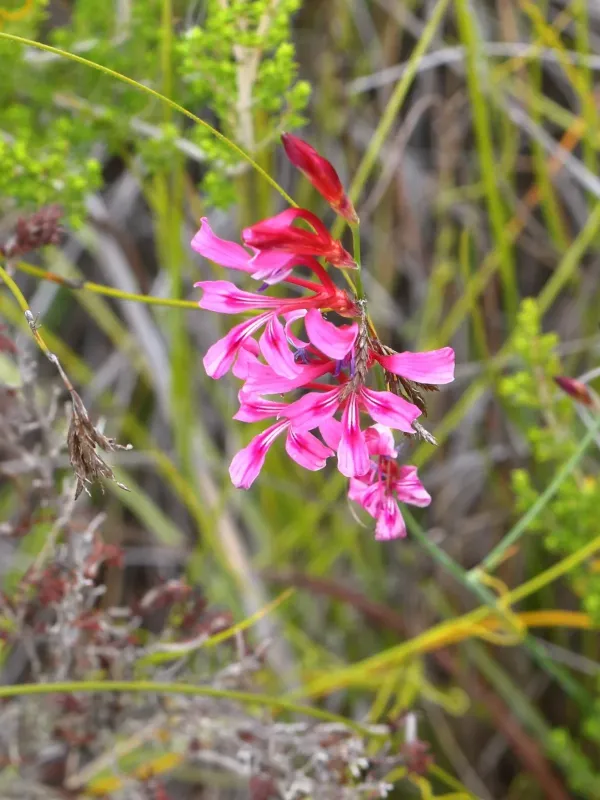
Description
Growing requirements
Tritoniopsis ramosa is a perennial bulbous plant belonging to the Iridaceae family. Native to the Cape region of South Africa, it is adapted to a Mediterranean-type climate with distinct seasonal rainfall patterns.
The plant thrives in well-drained, sandy soils that allow for rapid drainage, which is essential to prevent bulb rot during the dormant summer season. It requires a substrate that mimics its natural rocky or sandy habitat.
Environmental conditions must include high light intensity to support the plant's metabolic processes. It is a highly specialized species that is rarely grown commercially, typically found in botanical collections or by serious enthusiasts.
Temperature management is crucial; the plant prefers cool, moist conditions during its growth phase and a dry, warm period for dormancy. Excessive humidity combined with high temperatures can lead to rapid decline.
Botanically, it is recognized for its branched stems and distinctive, elegant inflorescences. Cultivation requires precise control over water application, especially during the transition between the active growing season and the onset of dormancy.