
Durum wheat
Triticum turgidum L. subsp. dicoccum (Schrank ex Schübl.) Thell. x Triticum durum Desf.
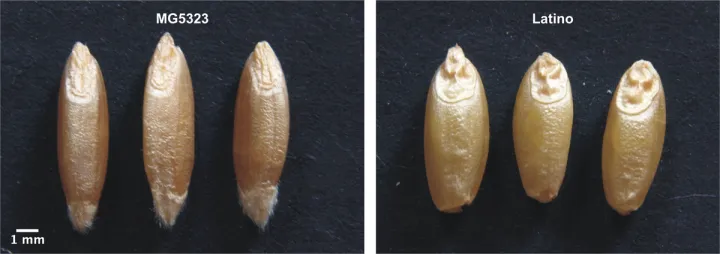
Description
Sowing dates
Durum wheat is typically planted in early spring when soil temperatures reach +5 to +7 degrees Celsius. Timely sowing is critical to capitalize on soil moisture, as this crop is generally more sensitive to drought stress compared to common soft wheat varieties.
Agronomists carefully plan planting dates based on regional climate forecasts and specific cultivar characteristics. Delaying sowing often results in grain filling during peak heat, which negatively impacts glassiness and overall grain yield potential.
Seeding rates usually range from 4 to 5.5 million viable seeds per hectare, adjusted for soil fertility and expected moisture levels. Seeds are planted at a depth of 4–6 centimeters to ensure uniform germination and emergence.
Post-seeding rolling is an essential practice to ensure optimal seed-to-soil contact, which aids in moisture retention and promotes synchronized germination across the entire field. This step is particularly important in drier climates.
Utilizing high-quality, high-vigour seeds is fundamental for establishing a robust crop stand capable of withstanding early-season environmental stresses and competing with weeds.
Growing requirements
Durum wheat thrives in highly fertile soils, particularly chernozems and dark chestnut soils. The crop prefers a neutral to slightly alkaline soil pH, as acidic conditions can severely inhibit nutrient uptake and overall plant development.
The plant has high light and thermal requirements throughout its life cycle. Abundant solar radiation during the heading and grain-filling phases is essential for producing high-quality grain with superior protein content and physical glassiness.
Water management is a pivotal factor in successful production, especially during the stem elongation and flowering stages. While the plant has some adaptive mechanisms for drier environments, sustained moisture stress at critical growth phases leads to substantial yield penalties.
A balanced fertility program is necessary, with nitrogen applications split into stages to optimize tillering and later support grain protein accumulation. Adequate phosphorus and potassium levels are also crucial for structural root development and lodging resistance.
Fields with potential for waterlogging or poor drainage should be avoided. The root system of durum wheat is particularly sensitive to hypoxic conditions caused by excess water, which can trigger early-season yellowing and stunting.
Yield
The yield of durum wheat depends heavily on the implementation of intensive farming practices and the effectiveness of integrated pest management strategies. Under optimal conditions, growers can achieve yields of 4–6 tonnes per hectare.
Glassiness is the primary quality indicator for durum wheat, with top-tier requirements usually exceeding 75–80 percent. This physical characteristic is essential for producing high-quality pasta, which requires a firm, non-starchy structure.
Protein content is a critical market quality metric, often requiring levels between 13% and 15% for premium pricing. Strategic nitrogen applications, particularly at the flag leaf stage, are instrumental in driving protein synthesis in the grain.
Rotational diversity, such as planting after legumes or fallow periods, helps optimize the soil’s nitrogen profile and improves overall field hygiene. These management choices are fundamental for consistent yield stability over the long term.
Growth regulators are often employed in high-input systems to reinforce the straw, preventing lodging and facilitating more efficient mechanical harvesting. This ensures that the yield potential is fully captured during the harvest season.
Main diseases and pests
Durum wheat is susceptible to various fungal pathogens, with stem rust, leaf rust, and fusarium head blight posing the most significant threats. Vigilant crop scouting and timely fungicide applications are standard protocols to protect yield and quality.
Powdery mildew and septoria can also emerge during damp, moderate-temperature conditions. Managing these pathogens early with systemic fungicides prevents the spread of infection to the upper foliage and the developing head.
Insects such as the cereal bug, cereal flies, and cereal leaf beetles can cause substantial damage to both vegetative tissues and reproductive structures. Integrated strategies combine cultural controls with targeted insecticide use to maintain population thresholds.
Bunt and other seed-borne diseases are effectively mitigated through rigorous seed treatment prior to planting. This protective layer ensures that the seedling is defended against soil-borne pathogens during its most vulnerable initial growth phase.
Adherence to a strict crop rotation schedule—avoiding wheat-on-wheat planting—remains the most effective cultural method for disrupting the life cycles of common wheat pests and pathogens.
Harvesting
Harvesting is conducted at full maturity when grain moisture levels drop to between 12% and 14%. Prompt harvesting is essential to prevent weathering and field losses caused by shattering, which can rapidly diminish grain quality and market value.
Direct combining is the preferred method for harvesting durum wheat, as it minimizes handling and prevents mechanical damage to the brittle grain kernels. Proper adjustment of cylinder settings is crucial to maintain grain integrity.
Cleaning the grain immediately after harvest is essential to remove chaff, weed seeds, and foreign materials that increase moisture and promote spoilage. Maintaining high cleanliness standards is vital for stable long-term storage.
Drying operations should be conducted with careful temperature control to avoid damaging the gluten structure or causing internal kernel fracturing. Precise temperature management ensures that the grain retains its aesthetic color and culinary properties.
Proper storage in well-ventilated, moisture-controlled bins is required to protect the grain from mold and stored-grain pests. Consistent monitoring ensures the grain remains in premium condition until it reaches the processing facility.