
Tristachya leucothrix
Tristachya leucothrix
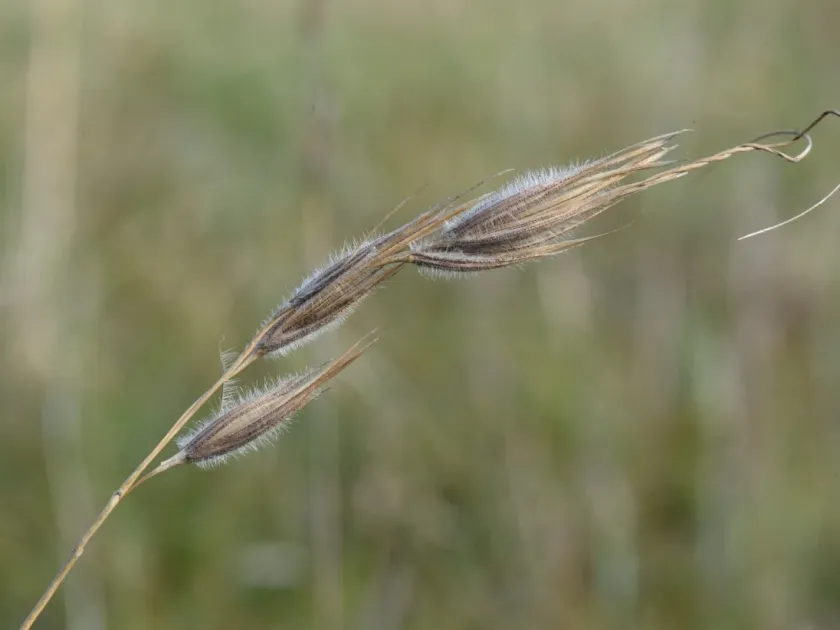
Description
Sowing dates
Tristachya leucothrix is a perennial grass species belonging to the Poaceae family. In natural habitats, this grass propagates through seeds that mature at the end of the growing season, typically synchronized with the local rainfall patterns.
When cultivating this species, timing the sowing period to coincide with the onset of the rainy season is essential for achieving successful germination and stand establishment.
The seedbed should be prepared by removing existing weed cover and ensuring a fine, firm surface. Sowing can be performed via broadcast seeding or by light incorporation into the topsoil to a depth of 1-2 cm.
Utilizing high-quality, viable seeds is critical, as the germination energy of wild-harvested material can be inconsistent depending on the climatic conditions of the harvesting site.
The seeding density should be adjusted based on the intended use; higher densities are recommended for pastures to ensure rapid ground coverage and competition against opportunistic weeds.
Growing requirements
This grass is native to the savanna and grassland regions, primarily in Southern Africa, making it highly adapted to subtropical climates and seasonal drought conditions.
Tristachya leucothrix is prized for its ability to thrive on poor, acidic, and rocky soils where many other forage species would fail to reach economic viability.
The species demonstrates excellent drought tolerance, maintaining growth in environments characterized by erratic precipitation and nutrient-deficient soils, which are common in its natural range.
As a light-demanding plant, it performs best in open, unshaded areas. Excessive competition from shrubs or trees will significantly reduce its growth rate and forage biomass production.
Proper drainage is necessary for the plant's long-term survival, as prolonged waterlogging can lead to root system decay, despite the species being overall hardy and undemanding.
Yield
The agricultural value of Tristachya leucothrix lies in its capacity to produce sustainable forage on marginal land, contributing to the productivity of extensive livestock farming systems.
With careful grazing management, this grass recovers quickly after defoliation, allowing for multiple utilization cycles during the growing season without compromising the plant's health.
The nutritional quality is highest during the early vegetative phase. As the plant enters the reproductive stage, fibre content increases and protein levels decrease, necessitating strategic grazing management.
Application of essential nutrients, particularly phosphorus and nitrogen, can significantly boost biomass yield in favorable years, increasing the stocking capacity of the pastures.
Typical biomass yields range between 3 to 6 tons of dry matter per hectare, depending heavily on soil fertility, moisture availability, and the duration of the growing period.
Main diseases and pests
Tristachya leucothrix possesses strong natural resistance to many common cereal diseases, though it may be susceptible to fungal leaf spots under conditions of excessive humidity.
The most significant threat to established stands is the invasion of aggressive, non-native weed species which can outcompete the grass if the pasture is overgrazed and the plant vigor decreases.
Occasional infestations by aphids or stem-boring insects may occur, especially in lush, high-growth periods, requiring standard monitoring to prevent impact on biomass yield.
Overgrazing represents a major threat, as it reduces the plant's carbohydrate reserves stored in the roots, eventually leading to stand thinning and long-term decline in pasture productivity.
Preventative management, including rotational grazing and periodic resting of the land, is the most effective way to maintain a healthy stand and mitigate the risk of disease and pest outbreaks.
Harvesting
For high-quality hay production, harvesting should take place at the onset of the heading stage to achieve the ideal balance between crude protein levels and overall dry matter yield.
Rapid field drying is essential to preserve the nutritional value and prevent the loss of nutrients through prolonged exposure to solar radiation or moisture during the curing process.
Seed harvesting is a delicate process due to uneven maturation of the seed heads; specialized machinery or careful manual collection is required to minimize losses from seed shattering.
Post-harvest processing involves thorough cleaning and drying of the seeds to ensure they meet quality standards for storage and subsequent sowing operations.
Seeds should be stored in cool, well-ventilated conditions to prevent the growth of storage molds and to maintain high germination rates over long periods of time.