
Triraphis mollis
Triraphis mollis
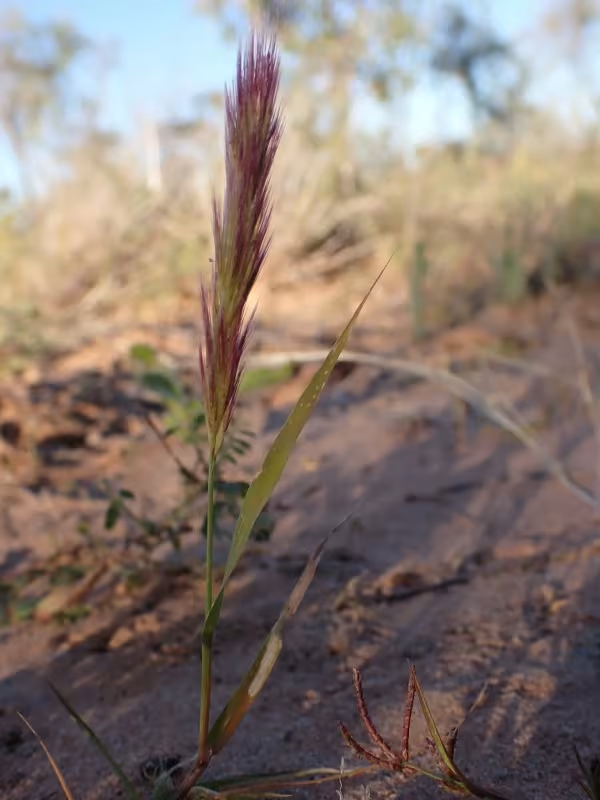
Description
Sowing dates
Triraphis mollis is a plant native to arid environments, and its sowing should ideally coincide with the onset of the rainy season when soil moisture is sufficient for germination.
Successful establishment requires proper seedbed preparation, as the seeds of this grass are relatively small and require shallow placement to emerge effectively.
Optimal sowing times depend on the local climate, but typically align with late spring or early summer to take advantage of the warming soil and incoming rainfall.
The seeds demonstrate good germination energy under the right conditions, allowing the grass to quickly colonize available space within a pasture environment.
Once established, the grass is often capable of natural reseeding, reducing the need for frequent supplemental planting in established pasture systems.
Growing requirements
Triraphis mollis belongs to the Poaceae family and is a perennial species well-adapted to harsh conditions, including sandy and rocky soil profiles.
The culture exhibits high resistance to extreme temperatures, making it a critical component for soil stabilization in regions susceptible to desertification.
This grass prefers open, sunny areas and does not tolerate shade well, so plant density must be carefully managed to ensure healthy growth.
It is not demanding regarding soil composition, though it performs best in light, sandy-loam soils with good drainage and no waterlogging issues.
Agronomic management is generally low-input, as the plant is evolutionarily adapted to survive in environments with low fertility and limited nitrogen levels.
Yield
The primary use of Triraphis mollis is for livestock grazing, where it is valued as a green forage source during periods when other vegetation is scarce.
Yield of green biomass depends directly on rainfall, but the grass maintains a stable biomass potential even during periods of minimal water availability.
Under controlled grazing management, this species shows good recovery rates after browsing, making it suitable for rotational pasture systems.
Nutritional value is highest during the tillering and elongation phases; therefore, grazing is recommended before the stems become overly lignified.
Seed production is prolific, which allows the species to be used not only for forage but also as a source of seeds for land restoration and revegetation projects.
Main diseases and pests
Triraphis mollis possesses natural resistance to most common grass diseases due to its long-term adaptation to dry, harsh environmental conditions.
Potential threats include fungal infections during periods of abnormal humidity, although such events are extremely rare in the plant's native habitat.
Insect pests like grass flies may cause localized damage during the early growth stages, but significant, widespread infestations are rarely recorded.
The primary threat to population stability is overgrazing, which can exhaust the root system and inhibit the long-term regrowth potential of the stand.
Weed competition is only a concern during the seedling stage; once the plant is mature, it is generally effective at outcompeting other vegetation in arid regions.
Harvesting
Harvesting Triraphis mollis for seed is performed mechanically using harvesters adjusted for small-seeded crops to minimize collection losses.
The timing of the harvest is critical and should occur when the panicles are fully mature and the seeds are easily detached from the spikelets.
It is important to avoid over-ripening, as the seeds are prone to shedding under high wind conditions, which can lead to substantial losses.
Post-harvest processing involves drying the seeds to a moisture level of 12-14% to ensure stability and prevent fungal growth during storage.
Seed cleaning is performed using sieve separators to remove organic debris, ensuring a high-quality product for future sowing and land management needs.