
Scentless mayweed
Tripleurospermum perforatum (Mérat) Laínz
Description
Growing requirements
Scentless mayweed (Tripleurospermum perforatum) is an annual or winter-annual herbaceous plant belonging to the Asteraceae family. It is a widely distributed weed found throughout the temperate regions of Europe and North America, often infesting arable lands.
The plant thrives in a variety of soil types, ranging from nutrient-rich loams to compacted heavy clays. It displays exceptional ecological plasticity, allowing it to colonize both undisturbed agricultural fields and disturbed roadsides or waste areas effectively.
Its primary competitive advantage is a deep, robust taproot system that ensures water uptake during dry periods. This, combined with rapid early-season growth, allows the plant to outcompete crops for light, nutrients, and moisture in the critical early stages of development.
Climatically, it is adapted to cool, moist environments but demonstrates high tolerance to temperature fluctuations. Seeds germinate at low soil temperatures, often emerging in early spring before many traditional crops, which establishes the weed's dominance.
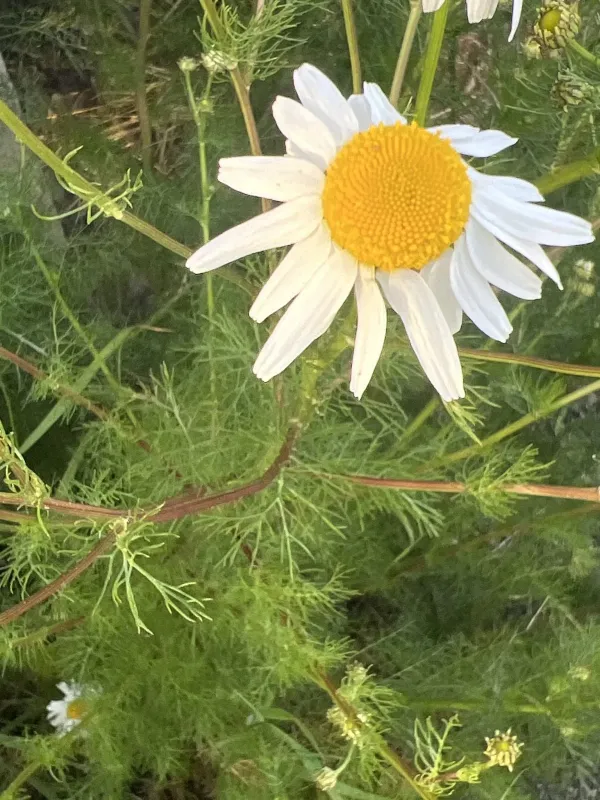
Morphologically, the plant features branched, hairless stems that reach heights of up to 80 cm. Unlike its relatives, such as the true chamomile, it lacks a strong aromatic scent. It produces numerous daisy-like flower heads that contribute to its high reproductive potential.
Main diseases and pests
While Scentless mayweed is resilient, it can be affected by various fungal pathogens, such as powdery mildew, particularly under conditions of poor air circulation and high humidity. These diseases may reduce the vigor of the plant but rarely eliminate established infestations.
Insect pests, including aphids and specific species of weevils, often feed on the foliage and reproductive structures of the plant. These attacks can slightly mitigate seed production, though the weed's sheer numbers usually override the impact of these natural enemies.
The most significant danger posed by this weed is its role as an alternative host for pathogens. It can harbor viruses that are transmissible to commercial crops, making it a critical focus for integrated pest management in vegetable and oilseed production.
Effective chemical control requires a strategic approach using herbicides during the seedling or early rosette stage. Resistance to certain groups of herbicides has been documented, necessitating the rotation of active ingredients to maintain effective field control.
Cultural management techniques include competitive crop rotation and timely soil cultivation. Reducing the soil seed bank by preventing the maturation of the weed's flowers is essential for maintaining long-term field hygiene and protecting harvest yields.