
Scentless mayweed
Tripleurospermum maritimum (L.) W. D. J. Koch
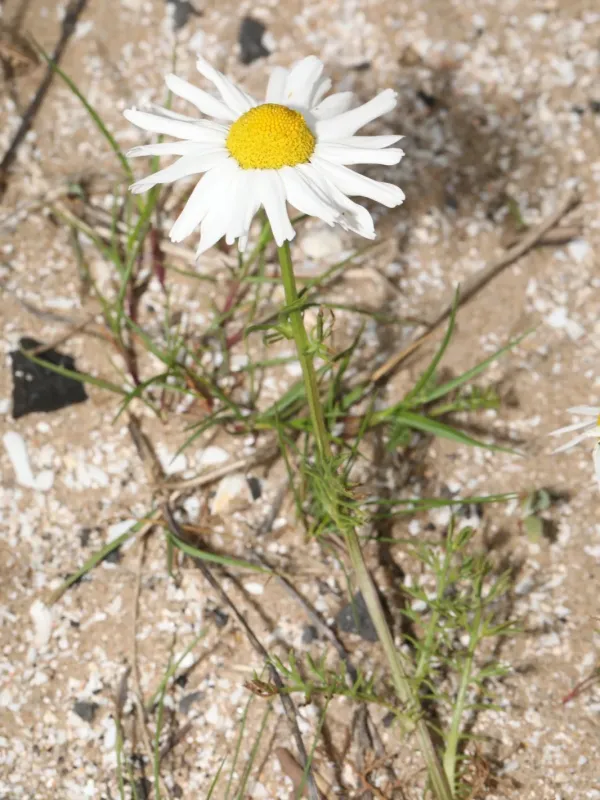
Description
Sowing dates
Germination of scentless mayweed seeds typically begins in early spring as soil temperatures reach 3 to 5 degrees Celsius. This timing often aligns with the planting of spring cereals, leading to significant competition.
The seeds can germinate from various depths in the soil, ranging from surface level down to 4 cm. They are known for their longevity, remaining viable in the soil seed bank for several years, which complicates long-term management.
In regions with mild winters, autumn-germinating seeds can survive the winter as rosettes. These plants resume growth early in the spring, allowing them to outcompete crops for early-season moisture and light.
Seedbed preparation is crucial in agricultural practice. Mechanical disturbance before crop emergence is highly effective in reducing the density of young mayweed populations early in the growing season.
Crop rotation remains a fundamental tool. Incorporating competitive crops or those requiring row cultivation allows for both biological suppression and mechanical weeding, reducing the reliance on chemical inputs.
Growing requirements
Scentless mayweed (Tripleurospermum maritimum) is an annual herb belonging to the Asteraceae family. Despite its visual similarity to common chamomile, it lacks the distinct aromatic oils, which is a key identification feature for agronomists.
The plant demonstrates high adaptability to various soil types, thriving in both heavy clays and light sandy soils. It is particularly successful in moist habitats and is frequently found in arable fields throughout the temperate regions.
Its natural range is widespread across the Northern Hemisphere. The plant is highly resilient and can colonize disturbed lands, field edges, and industrial sites, often becoming a persistent weed in agricultural systems.
Botanically, it features an erect, branched stem reaching heights of up to 80 cm. The leaves are bipinnate or tripinnate, finely dissected into narrow, thread-like segments, contributing to its dense, bushy growth habit.
Flowering occurs throughout the summer and autumn. The flower heads have white ray florets and yellow disk florets, producing vast amounts of seeds that are easily dispersed by wind and machinery.
Main diseases and pests
Scentless mayweed acts as a significant competitor in agricultural crops, reducing yields by extracting nutrients and water. Heavy infestations can lead to decreased harvesting efficiency and crop quality issues.
The species is known to harbor certain agricultural pests, such as aphids, which may migrate to crops. Additionally, it can act as a secondary host for various fungal pathogens affecting cereal and vegetable crops.
Chemical control via selective herbicides is the primary method of management in large-scale farming. Timing is critical; applications are most effective when the weed is in its early rosette stage.
Resistance management is becoming increasingly important, as some populations of mayweed have shown reduced sensitivity to common herbicide classes. Agronomists advise alternating active ingredients to maintain efficacy.
Integrated weed management, combining preventative, mechanical, and chemical approaches, is the recommended strategy to manage populations and prevent the spread of this invasive agricultural weed.