
Purple sandgrass
Triplasis purpurea
Description
Growing requirements
Purple sandgrass (Triplasis purpurea) is an annual grass species belonging to the Poaceae family. While it is not a widely cultivated crop, it is of significant botanical interest due to its unique physiological adaptations to highly stressful environmental conditions.
Native to North America, this plant is primarily found in sandy environments, such as dunes, sandy prairies, and disturbed dry lands. Its distribution is closely linked to its ability to thrive in soils that are poor in organic matter and nutrients where other species struggle.
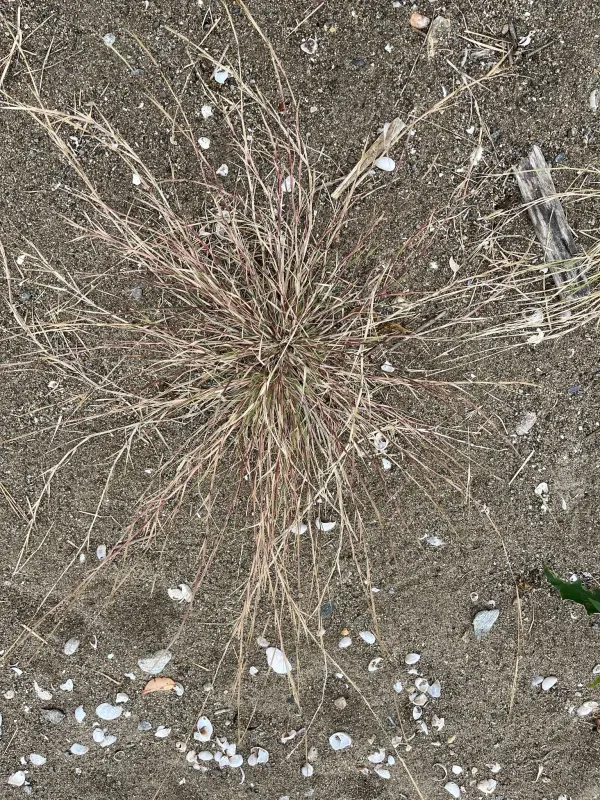
Botanically, the plant is characterized by its reddish-purple inflorescences and slender, often involute leaves. A notable feature is its tendency toward cleistogamy, where the flowers self-pollinate within closed sheaths, ensuring reproductive success even under suboptimal weather.
Regarding soil and climate requirements, Purple sandgrass favors full sun and well-drained, sandy substrates. It is exceptionally drought-tolerant, making it an excellent candidate for stabilizing sandy terrain in restoration projects rather than intensive agricultural use.
The plant grows to approximately 30–75 cm in height. Its ecological function is primarily protective, as it acts as a pioneer species on degraded land, helping to anchor mobile sand and prevent further soil degradation in arid or coastal environments.
Main diseases and pests
When present in agricultural settings, Purple sandgrass is considered a weed that competes for space and moisture. It is particularly persistent in sandy fields where intensive cultivation is not strictly practiced or where soil disturbance is high.
Effective management includes regular tilling and the application of pre-emergent herbicides in specific cases. Because the plant is an annual, preventing seed production is the most critical strategy for minimizing its presence in crop fields over successive seasons.