
Tridax daisy
Tridax procumbens L.
Description
Growing requirements
Tridax procumbens, commonly known as the Tridax daisy, is a member of the Asteraceae family. While often classified as a widespread weed in tropical regions, it has significant agricultural and pharmacological potential due to its bio-active secondary metabolites.
The species originated in Central and South America but has become a pan-tropical plant. It thrives in diverse soil types, provided they are well-drained. It demonstrates high adaptability to degraded soils, which makes it a resilient species in various tropical cropping systems.
Climate requirements for this plant are centered on tropical and subtropical conditions with high solar irradiance. It is highly drought-tolerant, which allows it to maintain productivity during dry spells when other herbaceous plants might enter dormancy.
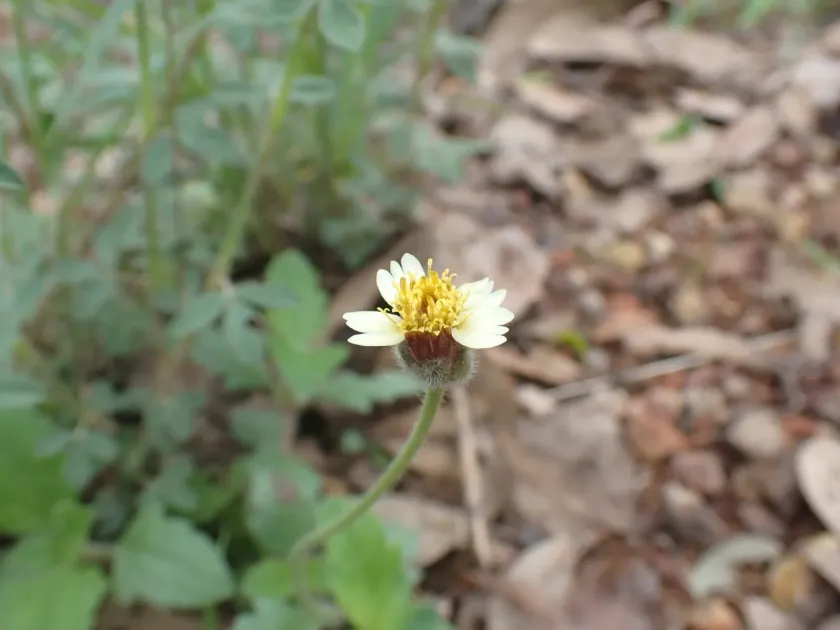
Botanically, it is recognized by its prostrate, creeping stems that root at the nodes, allowing it to form dense mats. The foliage is characteristically hirsute, and the inflorescence consists of yellow or white flowers arranged in small heads that resemble typical daisy structures.
Its primary agricultural use revolves around its role as a medicinal plant. Extracts from the leaves and flowers are utilized for their wound-healing, anti-inflammatory, and anticoagulant properties, stimulating a growing interest in its organized cultivation for pharmaceutical sourcing.
Main diseases and pests
The crop is susceptible to various fungal pathogens when subjected to excessive humidity, particularly powdery mildew and root rot. Proper spacing and site selection are essential for maintaining plant health and preventing the spread of soil-borne pathogens.
Pests such as aphids and leaf-eating caterpillars present the most common threat to biomass production. Integrated Pest Management (IPM) strategies, focused on biological controls, are highly recommended to ensure the purity and quality of the medicinal material collected.