
Indian borage
Trichodesma indicum (L.) Sm.
Description
Growing requirements
Indian borage (Trichodesma indicum) is an annual herbaceous plant belonging to the Boraginaceae family. It is native to tropical regions of Asia, including India, Pakistan, and various parts of the African continent.
The crop thrives in well-drained, sandy-loam soils with a neutral or slightly alkaline pH. It is highly drought-tolerant, which makes it suitable for cultivation in semi-arid environments where water resources are limited during certain periods of the growing season.
Optimal growth occurs in temperatures ranging from +25 to +35 degrees Celsius. Being a sun-loving plant, it requires full exposure to light to develop its characteristic stiff stems and dense foliage, which are key for its biological health.
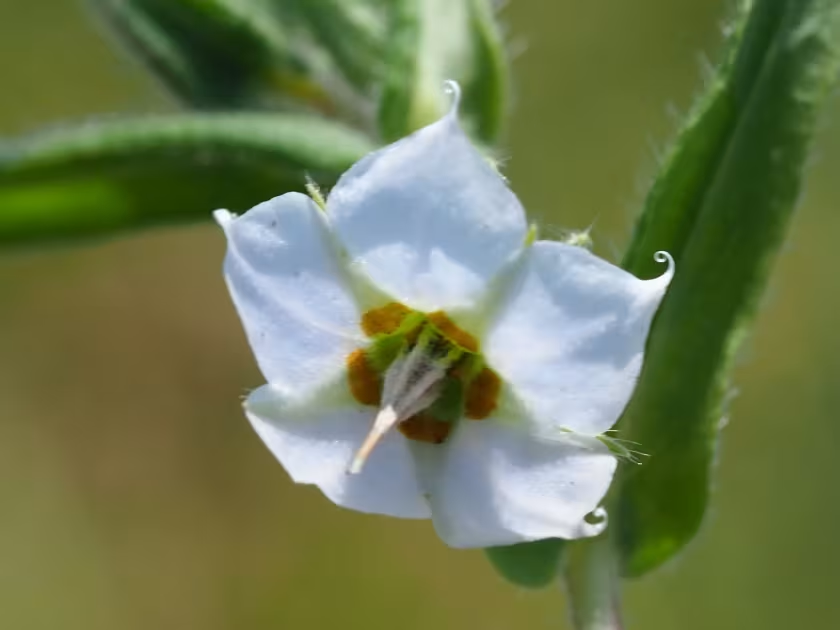
Botanically, the plant is known for its coarse, hairy texture which acts as a protective layer against excessive transpiration. The flowers are typically bell-shaped and vary in color, often blooming in white, light blue, or violet shades throughout the summer season.
Economically, Trichodesma indicum is primarily cultivated for its medicinal properties. Traditional medical practices utilize various parts of the plant, including roots and leaves, to treat inflammatory conditions, fevers, and skin-related issues.
Main diseases and pests
The primary threats to this crop include fungal diseases induced by poor drainage or excessive humidity. Root rot is particularly dangerous and can lead to mass decay of seedlings during the initial phases of plant development.
Pests such as aphids and leaf-eating beetles frequently target the tender shoots. Although the plant is somewhat protected by its stiff hairs, high population densities of insects can significantly stunt growth and reduce the quality of the harvested herb.
Invasion by aggressive weeds poses a serious challenge, as the Indian borage is relatively slow-growing in the seedling stage. Mechanical weeding or careful cultivation is essential to maintain the health of the crop.
Powdery mildew may occur if the planting density is too high, leading to poor air circulation around the plants. Maintaining optimal distance between individual plants is a necessary practice for a healthy harvest.
Soil-borne pathogens are a constant concern in intensive agriculture. Practicing crop rotation is the most effective way to prevent the buildup of diseases and maintain the long-term productivity of the field.