
Trichocladus ellipticus
Trichocladus ellipticus
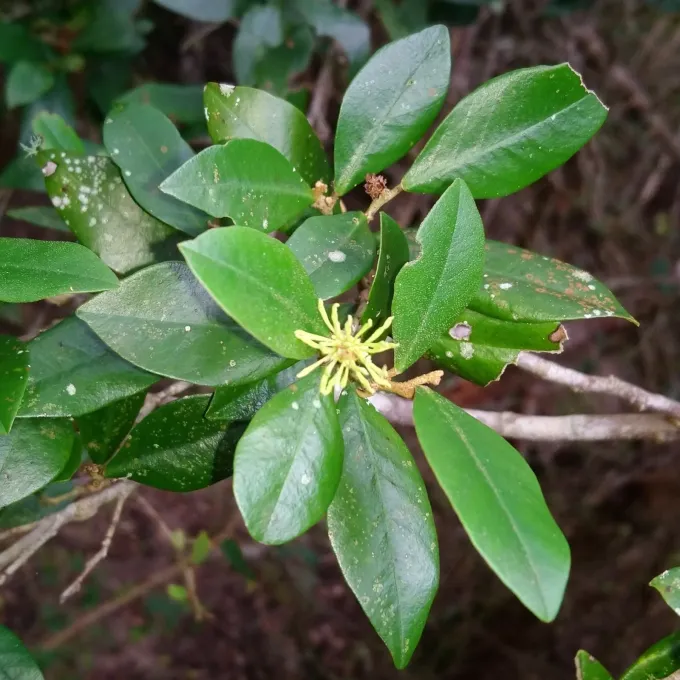
Description
Growing requirements
Trichocladus ellipticus is a notable species belonging to the Hamamelidaceae family. It is native to the tropical and subtropical regions of Africa, where it thrives in montane forests and humid forested environments, often acting as a key component of the understory vegetation.
The plant requires specific climate conditions characterized by consistent moisture and moderate ambient temperatures. It prefers well-drained, nutrient-rich soils that support its root system without causing waterlogging, which is critical for long-term health and growth.
Botanically, this shrub is recognized by its elliptic, hair-covered leaves, which exhibit structural adaptations to its native environment. It typically forms dense, rounded bushes that can serve as excellent structural elements in various landscape design projects.
The primary horticultural application of Trichocladus ellipticus is ornamental. It is valued for its evergreen foliage and its ability to maintain a neat appearance with minimal maintenance, provided the environment matches its ecological requirements.
Cultivation practices involve regular irrigation to mimic its native forest conditions and the application of balanced, organic-based fertilizers. Pruning should be performed sparingly to maintain the natural shape of the shrub while encouraging dense foliage development.
Main diseases and pests
The plant is generally resilient but may suffer from fungal infections if soil aeration is poor or if high humidity persists without adequate airflow. Preventive measures include choosing an open site with sufficient light to ensure leaves dry quickly after precipitation.
Common pests include aphids and mites, which are prevalent in many tropical shrub species. Regular inspection of the undersides of the leaves is advised, and using organic horticultural soaps or oils is often sufficient to manage pest infestations effectively.