
Trachycarpus fortunei
Trachycarpus fortunei (Hook.) H. Wendl.
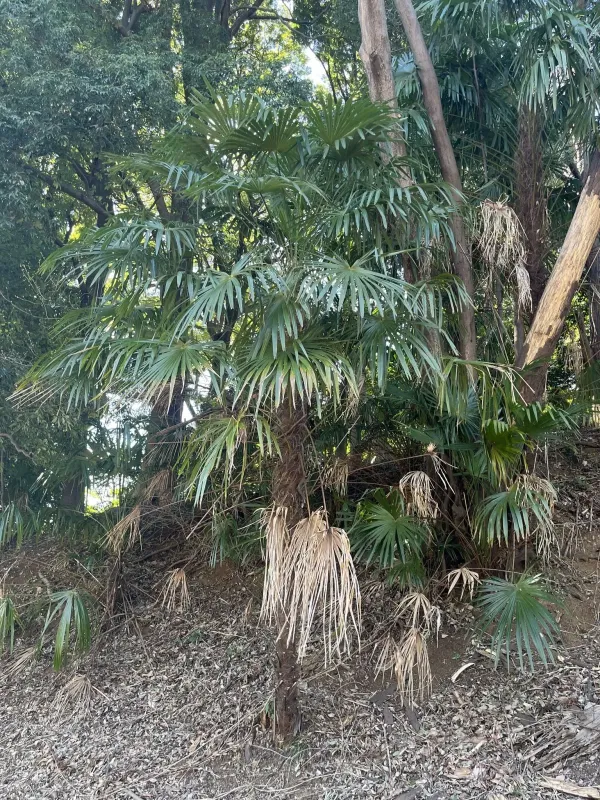
Description
Sowing dates
Propagation of Trachycarpus fortunei is primarily achieved through seeds. To maximize germination rates, seeds should be sown as soon as they are harvested from the parent plant.
The optimal sowing time in controlled environments is late winter or early spring. Seeds should be soaked in lukewarm water for 24 hours to soften the hard outer seed coat.
A well-draining, sterile peat-based medium is ideal for sowing. Seeds should be covered lightly and placed in a warm area with temperatures maintained around 22–25 degrees Celsius.
Germination is often slow and erratic, ranging from one to three months depending on the freshness of the seeds and consistent moisture levels in the substrate.
Once seedlings develop their second true leaf, they should be carefully transplanted into individual deep containers to accommodate the developing taproot system.
Growing requirements
Trachycarpus fortunei belongs to the Arecaceae family and is widely regarded as one of the most cold-hardy fan palms, capable of thriving in temperate regions.
The plant performs best in a sunny or light shade location protected from harsh, desiccating winds that can shred the large, fan-shaped fronds.
Soil requirements include excellent drainage and moderate fertility. It adapts to various soil types, ranging from sandy loams to heavier clays, provided they are not waterlogged.
Irrigation should be consistent during the active growing season, but the plant requires a drier environment during the winter dormancy period to prevent root rot.
While the palm can withstand temperatures as low as -15 degrees Celsius for short durations, protecting the crown and trunk is recommended in areas prone to deep, prolonged freezes.
Yield
The agricultural and economic significance of Trachycarpus fortunei lies in its utility as an ornamental species and a source of fiber for industrial manufacturing.
The fibrous material covering the trunk is traditionally used in Asian agriculture for producing high-quality rope, mats, brushes, and durable packaging materials.
The growth rate is generally slow to moderate, with established palms potentially adding significant trunk height annually under optimal fertilization and water management.
The fruit of the windmill palm is a small, dark blue drupe, though it does not hold significant commercial value in the food sector due to its limited pulp content.
Productivity in a nursery setting is measured by the quality of the foliage, the development of a strong trunk, and the overall hardiness of the specimen for transplantation.
Main diseases and pests
Common pests include spider mites, mealybugs, and scale insects, which often colonize the underside of the leaves or the base of the petioles, particularly in dry conditions.
Root rot caused by Phytophthora species is a major threat, usually resulting from inadequate soil drainage or persistent overwatering in poorly ventilated environments.
Leaf spot diseases, caused by various fungal pathogens, may appear if humidity remains high and the foliage does not dry out quickly after rainfall or irrigation.
Preventive measures include maintaining good plant spacing for airflow, avoiding overhead watering, and monitoring for early signs of pest infestations.
- Regular monitoring of the crown for pests.
- Application of systemic insecticides for scale control.
- Fungicide applications during high-humidity periods.
- Ensuring proper soil drainage at the planting site.