
Touchardia latifolia
Touchardia latifolia
Description
Sowing dates
Touchardia latifolia, widely known as Olona, is a perennial shrub belonging to the Urticaceae family. In agricultural practice, propagation is primarily carried out via vegetative methods, such as cuttings or layering, as the plant rarely produces viable seeds suitable for mass-scale sowing in a cultivation environment.
The optimal time for planting cuttings is during periods of high humidity and mild temperatures. This climate synchronization allows the root system to establish itself efficiently within the soil, providing the young plant with the necessary vigor to withstand environmental transitions.
Planting density is strictly calibrated based on the final usage of the crop. For high-quality fiber production, plants are spaced to encourage vertical growth and limit excessive lateral branching. This strategy minimizes the need for mechanical pruning and ensures a straight, uniform stem structure.
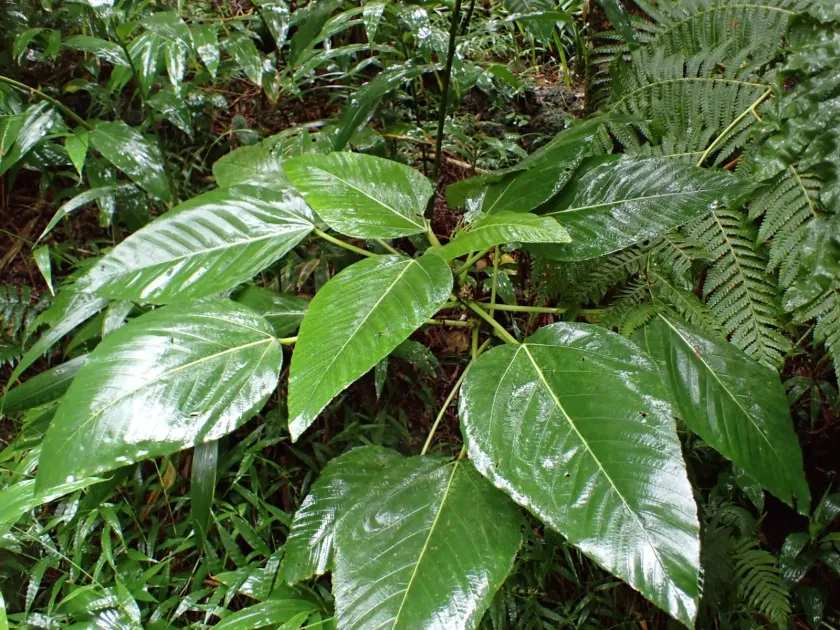
Biologically, the plant is an evergreen shrub that can reach heights of up to 4 meters under favorable tropical conditions. Its broad, pubescent leaves serve as the primary photosynthetic surface, which is vital for the rapid accumulation of biomass and the synthesis of high-quality internal fibers.
Successful establishment requires fertile, well-prepared soil with a slightly acidic to neutral pH. Incorporating organic matter during the initial planting phase is critical for fostering a robust stem, which is the primary economic asset of this specific crop.
Growing requirements
The crop has very specific climatic requirements, favoring tropical environments with high atmospheric humidity and consistent rainfall. It thrives naturally in forest-like conditions, where natural canopy cover protects the plants from intense heat and excessive transpiration.
Soil must possess excellent drainage capabilities, as waterlogging is highly detrimental to the root system. Volcanic soils or loose, well-draining loams rich in organic material provide the ideal environment for the plant to thrive and produce durable, high-quality fiber.
Stable temperature ranges are essential for consistent growth. The plant performs best in a range between +20°C and +28°C. Deviations from these temperatures, particularly exposure to frost or sudden cold snaps, can cause irreversible damage to the plant's vascular tissues.
In managed agricultural settings, practitioners often utilize artificial shading to replicate the natural understory environment. This controlled light environment is crucial for keeping the stems smooth and long, which simplifies the subsequent fiber extraction process.
Protection from high winds is an essential component of the farm design. Because the stems of Touchardia latifolia can be relatively brittle, establishing windbreaks of taller, hardy species around the plantation perimeter is standard practice to prevent lodging or breakage.
Main diseases and pests
The primary threats to the crop include various fungal pathogens that thrive in high-humidity environments. Preventive maintenance, such as regular pruning and thinning, is essential to increase airflow through the canopy and reduce the risk of stem and leaf decay.
Pest management focuses on protecting the soft, young foliage from sap-sucking insects. Regular monitoring allows for the early detection of infestations, enabling the use of targeted biological controls to preserve the organic quality of the fiber product.
Root rot is a critical concern, often stemming from improper drainage or the selection of heavy, clay-rich soils. Improving soil porosity through the installation of underground drainage systems is the most effective way to protect the long-term health of the plantation.
Weed control is vital, especially during the early stages of plant development. Because Touchardia latifolia is highly sensitive to most chemical herbicides, manual weeding or the use of heavy organic mulching is the preferred method for managing competitive vegetation.
Soil erosion on sloped sites poses a risk to the shallow root systems of the shrubs. Implementing soil stabilization techniques, such as contour planting or the use of cover crops, is necessary to prevent root exposure and ensure the continued productivity of the site.
Harvesting
The economic value of Touchardia latifolia is concentrated entirely in its exceptionally strong bast fiber. Harvest occurs when the stems reach technical maturity, a point characterized by maximum fiber density and an optimal balance between cellulose and lignin content for processing.
After manual cutting, the stems undergo decortication. This is the process of stripping the inner fibers from the woody core and bark. Historically, this was achieved using specialized scraping tools, a method that remains highly effective for maintaining fiber length and structural integrity.
The resulting fiber is globally recognized for its extreme tensile strength and superior resistance to degradation, particularly in marine environments. Traditionally, it was the gold standard for high-performance fishing nets, ropes, and artisanal textiles that required long-term durability.
Harvest frequency is determined by the growth rate of the specific cultivar and the local climate. With proper management and soil nutrient replenishment, a plantation can support repeated harvests, making it a sustainable choice for fiber-producing regions.
Post-harvest processing concludes with careful drying in a well-ventilated, shaded environment. Exposure to direct sunlight during the drying phase is avoided, as UV rays can compromise the molecular structure of the fibers, rendering them brittle and reducing their overall economic value.