
Earleaf false foxglove
Tomanthera auriculata
Description
Growing requirements
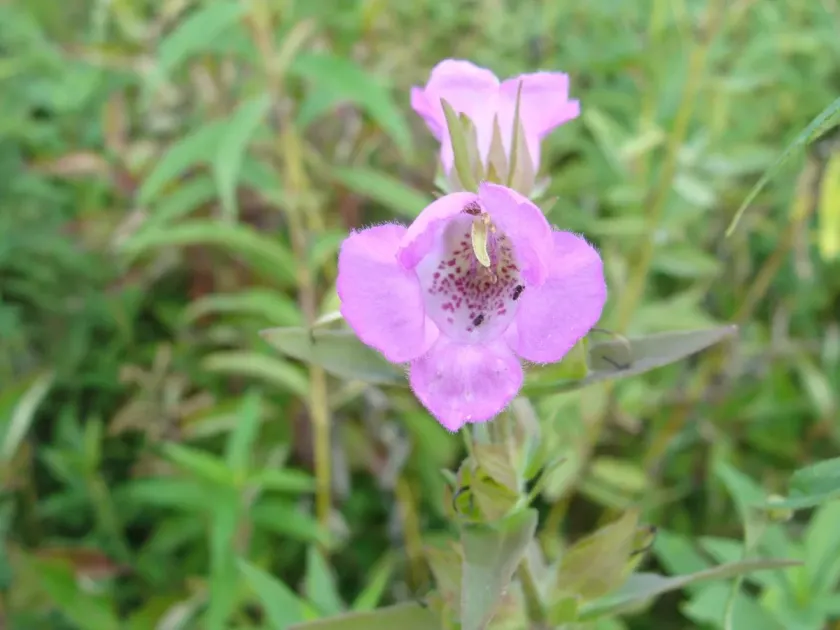
Earleaf false foxglove (Tomanthera auriculata) is a herbaceous perennial belonging to the family Orobanchaceae. It is classified as a hemiparasitic plant, meaning it relies on the root systems of host plants to supplement its nutrient intake.
The native range of this plant is primarily within the prairie regions of North America. It thrives in open, sunny environments where soil moisture remains consistent throughout the growing season, typically found in remnant grassland habitats.
The species has specific growth requirements, including the presence of suitable host species within its root zone. It is highly sensitive to habitat degradation and often disappears when the structural integrity of the prairie ecosystem is compromised.
Botany enthusiasts recognize it by its unique auriculate, or ear-shaped, leaf bases. During the summer, the plant produces distinctive flowers that are essential for the pollination cycles of various native insect populations.
Currently, the earleaf false foxglove is not utilized as a commercial agricultural crop. Instead, it serves as a valuable indicator species in conservation biology, often cultivated in specialized restoration projects aimed at preserving prairie biodiversity.