
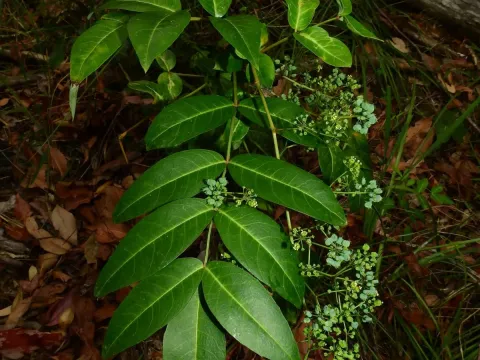
Tieghemopanax
Tieghemopanax
Tieghemopanax is a genus belonging to the Araliaceae family, native to the tropical and subtropical regions of the Southern Hemisphere, particularly Australia and New Caledonia. These plants are evergreen trees or shrubs that naturally thrive in the humid understories of rainforests, favoring stable environments with minimal temperature fluctuations.
What the section contains

Tieghemopanax
Botanically, Tieghemopanax is characterized by its glossy, pinnate foliage and a sturdy stem structure. The leaves are typically arranged alternately and possess a leathery texture designed to minimize transpiration in dense forest environments. While the flowers are generally inconspicuous, they cluster in umbels that contribute to the plant's unique biological classification.
To successfully cultivate Tieghemopanax, one must provide a well-drained, nutrient-rich potting medium. A mixture of loam, organic compost, and coarse perlite is ideal for ensuring proper root aeration. Given their natural habitat, these plants require high atmospheric humidity, which can be achieved through regular misting or the use of humidifiers in indoor settings.
Temperature management is paramount for the health of this species. It is highly sensitive to cold, requiring a consistent environment where temperatures stay above +20°C for optimal growth. Exposure to drafts or sudden temperature drops can cause significant physiological stress, often leading to premature leaf drop or stunted development.
The primary use of Tieghemopanax is ornamental. It is highly sought after by collectors of exotic tropical flora for use in conservatory displays and interior landscaping. Beyond aesthetics, the genus is of interest to botanical research due to the diverse secondary metabolites found in its tissues, which may hold potential for medicinal applications.
The most frequent pests affecting Tieghemopanax include spider mites and scale insects, which thrive in dry indoor conditions. Maintaining high humidity is the best preventive measure, though horticultural oils or specific insecticidal soaps can be applied if a significant infestation is detected during routine inspections.
Root rot caused by Phytophthora species represents the most serious threat to Tieghemopanax. This condition usually results from improper irrigation practices, such as waterlogging the soil. Ensuring excellent drainage and allowing the top layer of the substrate to dry between waterings is essential for long-term survival.