
Thuidium delicatulum
Thuidium delicatulum
Description
Growing requirements
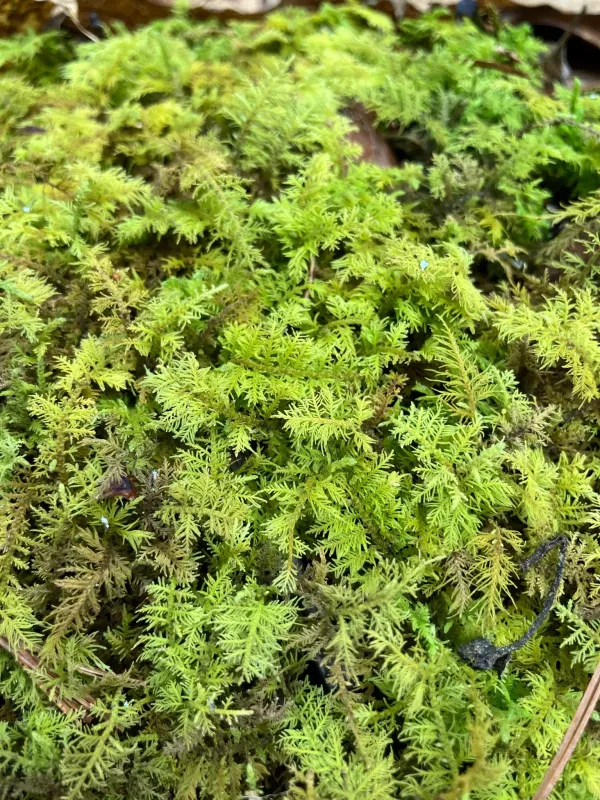
Thuidium delicatulum, commonly known as delicate fern moss, belongs to the family Thuidiaceae. This pleurocarpous moss is highly regarded for its intricate, fern-like branching patterns that form dense, lush carpets in forest understories.
The species is native to temperate regions of North America and parts of Eurasia. In its natural habitat, it thrives in shaded environments, often colonizing decaying logs, rocky outcrops, and moist, nutrient-rich forest floors where it can access constant moisture.
Cultivation requires a medium with an acidic to slightly acidic pH, typically ranging between 5.0 and 6.0. The substrate must be loose and organic-rich, such as peat-based mixtures or composted leaf litter, to ensure excellent water retention without becoming waterlogged.
Environmental conditions must mimic a woodland climate. This moss is sensitive to high light intensity and requires deep or filtered shade to prevent the thallus from scorching or turning brown. Stable, high humidity levels are essential for healthy development.
The agricultural approach to growing this moss involves meticulous water management. Using deionized or rainwater is critical to prevent the accumulation of salts, which can damage the delicate cellular structure of the bryophyte and impede its growth.
Main diseases and pests
The most significant threat to Thuidium delicatulum is desiccation. If the moisture levels fall below the threshold required for photosynthesis, the moss will quickly lose its structural integrity and turn brown, eventually leading to plant death.
Improper irrigation with hard, mineral-rich water is a common cultivation error. The resulting salt buildup on the surface of the moss can be toxic, leading to inhibited growth, discoloration, and a decline in the aesthetic quality of the moss carpet.
Pests such as slugs and snails are primary biological threats, as they find the soft tissues of the moss highly palatable. Their feeding activity can create large, unsightly holes in established colonies, necessitating physical barriers or management.
Poor ventilation in closed systems often leads to fungal outbreaks, such as gray mold or damping-off pathogens. These issues are exacerbated by excessive stagnant water, which creates the perfect environment for opportunistic pathogens to thrive.
- Maintain high ambient humidity.
- Avoid exposure to harsh sunlight.
- Ensure frequent air circulation in indoor setups.
Harvesting
Harvesting Thuidium delicatulum involves the careful removal of moss mats from the growing surface. This process is often performed manually using specialized knives or spatulas to lift pieces of the colony without disrupting the underlying substrate.
The best time for harvesting is during the peak growing season when the moss is robust and fully expanded. Collectors usually take only portions of a patch, allowing the remaining moss to naturally regenerate the area over subsequent growing cycles.
After removal, the moss material must be cleaned of debris such as twigs and leaves. To maintain quality during transport, the pieces are placed in containers that simulate a greenhouse environment, ensuring high moisture levels and adequate protection.
In commercial nursery settings, the moss may be cultivated on prepared mats or trays. This controlled environment allows for a systematic harvest, providing a product that is clean, uniform, and ready for use in terrariums, vivariums, or landscape projects.
Following a harvest, the residual moss colony should be misted with water and, if necessary, treated with diluted organic fertilizers. This stimulates lateral growth and helps the colony expand to fill the gaps created during the harvest process.